The big picture
What is climate change?
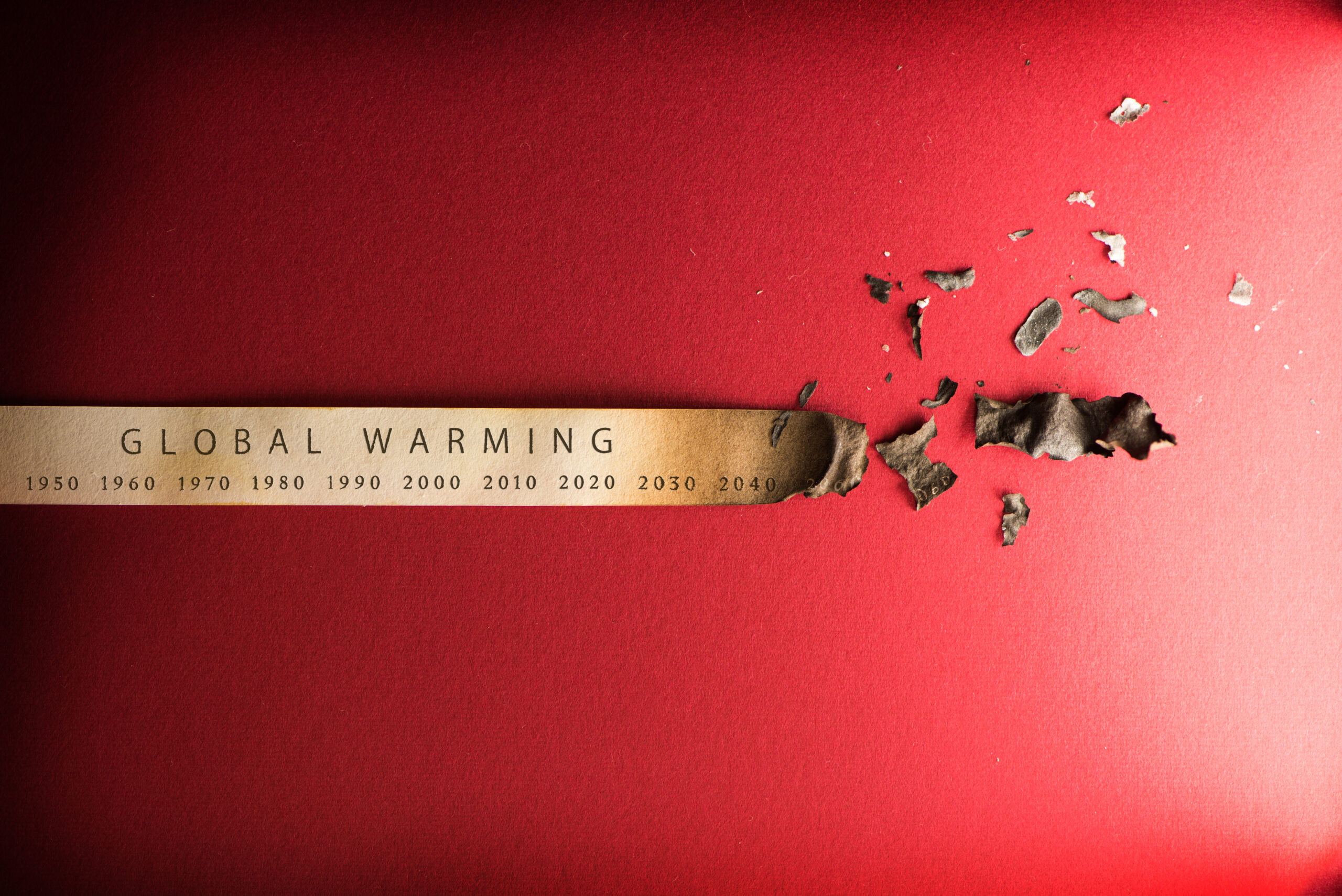
Climate change is the long-term warming of Earth and the shifts in weather that come with it. Burning fossil fuels and clearing forests release carbon dioxide, which traps heat in the atmosphere.
People view climate change through many lenses, but each leads to the same conclusion – we must act to restore the resiliency of our planet and offset human-caused changes to our environment. Experts agree that we will not meet our goals for slowing climate change without forests to remove carbon from the atmosphere.
- Sea-level rise
- 4 inches
- Since 1993, and the yearly rate has more than doubled13
- People at risk
- 150 million
- Live on land that will fall below the high-tide line by 20509
- Carbon dioxide
- 47.7 billion tons
- Released by people in 2026, a record high10
- Extinction rate
- 1,000 times
- The natural rate, driven by tropical deforestation6
Emissions
Global Carbon Emissions
Global carbon dioxide emissions increased from about 2 billion tons per year in 1900 to a projected 47.7 billion tons in 2026.10 Emissions from fossil fuels dipped slightly this year, but clearing forests pushed the total to a new record. The numbers will keep climbing if we don’t take action.
The amount of carbon dioxide per person varies widely. In general, the oil-producing countries in the Middle East top the charts, followed by developed countries. Hover over each country in the map below to see how carbon dioxide emissions vary across the world.
426.8 parts per million The global average concentration of carbon dioxide in the atmosphere in 2025, up 2.8 parts per million from 2024.11 Before the Industrial Revolution, it was about 280 parts per million.
How we got here
How We Got Here
Three of the world’s most urgent environmental crises – climate change, rapid deforestation and mass species extinction – are all interconnected problems that compound each other and their impacts on the planet. Currently, global carbon emissions are about 13 billion tons of carbon per year.10
That goes into the atmosphere as 47.7 billion tons of carbon dioxide – a greenhouse gas that traps heat and causes global warming. That’s about 1.6 tons of carbon (5.7 tons of carbon dioxide) per person per year. However, these emissions do not fall equally around the world – rich countries emit far more than poor ones. For example, the average person in the United States adds 16 tons of carbon dioxide to the atmosphere each year.10
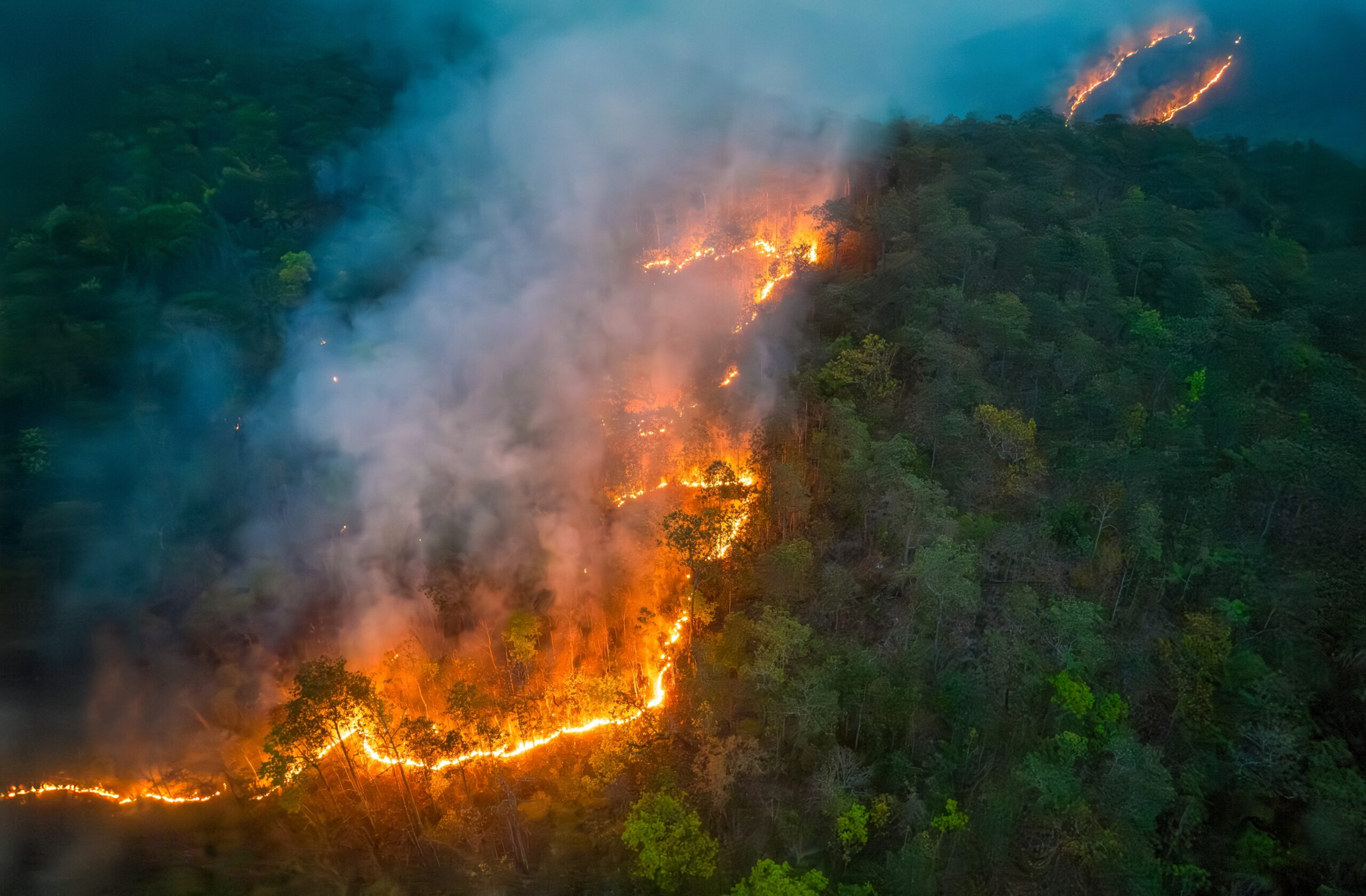
Deforestation – of which the burning of tropical forests is the major component – contributes about 12% of all emissions.10 In fact, some tropical countries have much higher carbon emissions than one might expect from their industrial activities. It turns out that burning tropical forests to grow crops and graze cattle actually creates two problems – it adds carbon dioxide to the atmosphere and destroys trees that absorb carbon dioxide.
How Species Are Adapting to Climate Change
Their effects multiply
Deforestation causing both extinctions and climate change is bad enough. Even worse, their effects multiply.
Species move uphill
Even simple warming pushes species higher in mountainous areas to keep within habitable temperatures. There is abundant evidence that species are doing this and, when they do, their ranges shrink. This means they have less viable habitat.
Fragments block the way
Species moving uphill to keep cool may not be able to do so, because habitat loss has fragmented the landscape and species cannot safely move from one isolated fragment to another.
Some go extinct
Ultimately, some may lose all the places that are habitable and so go extinct. Tragically, many montane species escaped major habitat loss because of their remoteness. Their extinctions from climate shifts add to those extinctions in lowland areas.
Evidence from space
Climate Change Viewed From Space
NASA has a unique vantage point of what is happening in our climate. We are sharing some of their compelling visuals that provide unparalleled insight into the state of our planet’s resilience.
Watch Forests Soak Up Carbon
An ultra-high-resolution NASA simulation shows how forests are on the front lines for reversing climate change. The model illustrates distinct swings in global carbon dioxide concentrations as the growth cycle of plants and trees changes with the seasons.
See How the Planet Has Warmed Since 1880
While scientists expect temperatures to fluctuate from year to year, the average temperature of the planet has increased about 2.6°F since the late 1800s.12 Increasing human emissions of carbon dioxide and other greenhouse gases largely drive this trend.
Our approach
Our Role In Fighting Climate Change
Even under the most optimistic scenarios, we aren’t going to reduce the high levels of carbon dioxide anytime soon. What do we do about this at Saving Nature? There are two kinds of solutions – we can reduce carbon emissions and we can make it as easy as we can for species to move to cooler climes. Our strategy fights climate disruption, deforestation and extinction at the same time, with the same resources.
1. We Plant Trees to Fight Climate Change
Planting trees is an under-appreciated solution to reducing the carbon dioxide in the atmosphere. It’s cost-effective and scalable. In addition, if done strategically with the right trees in the right places, it can also help save endangered species. At Saving Nature, we are working to ensure species will not go extinct in habitat fragments that are too small to sustain viable populations.
Why trees? Because trees have been quietly offsetting these carbon emissions for centuries, converting carbon dioxide into the oxygen we need for life. On average, it takes about 1,025 trees to offset a typical American’s emissions, with each tree absorbing about 31 pounds of carbon dioxide each year.
In total, tropical moist forests soak up about 2.8 tons of carbon (10.5 tons of carbon dioxide) from the atmosphere per acre. Of course, that number depends on various factors, including how wet the climate is, how warm, and how good the soil – but it’s a good average, though perhaps on the conservative side.
2. We Reconnect Forests to Save Species from Extinction
Species do not have the option of waiting for governments to do something to reverse climate change. For them, climate change has already made their habitat too warm. As a result, they are moving towards the poles and, in the tropics, to higher elevations. That is when they can.
The forests we restore to create wildlife corridors are essential for absorbing carbon dioxide and fighting climate change. In addition, they are a critical link between fragmented habitats that allow species to move freely again.
In addition, these wildlife corridors allow species ways to escape habitats for cooler ones upslope. It’s a near-immediate solution – we know that forest species start moving through our reforested corridors within a few years of our planting them.
Put simply, reconnecting fragmented landscapes is the only practical, immediate solution to the pressing problem of species going extinct in isolated forest patches that are becoming too warm for them.
Large areas of once tropical forest can grow carbon better than they can grow cattle.
What you can do
Your Role In Fighting Climate Change
We all own climate change. Carbon dioxide emissions are unavoidable, but leaving a carbon footprint is not. Take the first step and erase your contribution to the problem. Restoring tropical forests is the best way to offset your carbon emissions. They soak up an average of about 10.5 tons of carbon dioxide per acre per year for at least 20 years.
You are either helping in the fight against the world’s two most pressing environmental problems – loss of biodiversity and global warming. Or you are complicit in the problem.
How will you stop climate change?

Questions
Climate change questions people ask
How do forests slow climate change?
Trees pull carbon dioxide out of the air as they grow and store the carbon in their wood, roots and soil. Tropical moist forests soak up about 10.5 tons of carbon dioxide per acre per year.
How much carbon dioxide does one tree absorb?
About 31 pounds a year, on average. It takes about 1,025 trees to offset the 16 tons of carbon dioxide a typical American adds to the atmosphere each year.
Can planting trees stop climate change on its own?
No. The world also has to cut emissions from fossil fuels. But planting trees is cost-effective and scalable, and when you plant the right trees in the right places, you also help save endangered species.
How does deforestation cause climate change?
Burning and clearing tropical forests releases about 12% of the carbon dioxide people emit. It also destroys the trees that would have absorbed carbon dioxide, so it creates two problems at once.
How does climate change affect wildlife?
As their habitat warms, species move toward the poles and, in the tropics, to higher elevations. Where farms and roads have broken forests into isolated patches, many species cannot move and risk extinction.
How can I offset my carbon footprint?
Start with our carbon footprint calculator to estimate your emissions. Then offset your footprint by planting trees that restore tropical forests.
Topic center
Read More From Our Topic Center
We spend a lot of time thinking about climate change and the most practical approaches to having real impact in reversing the global warming trend. Here we share some basics about climate change – the scope of the problem, the struggle for survival of many species, and the role of forests in reversing the accumulation of atmospheric carbon dioxide.