
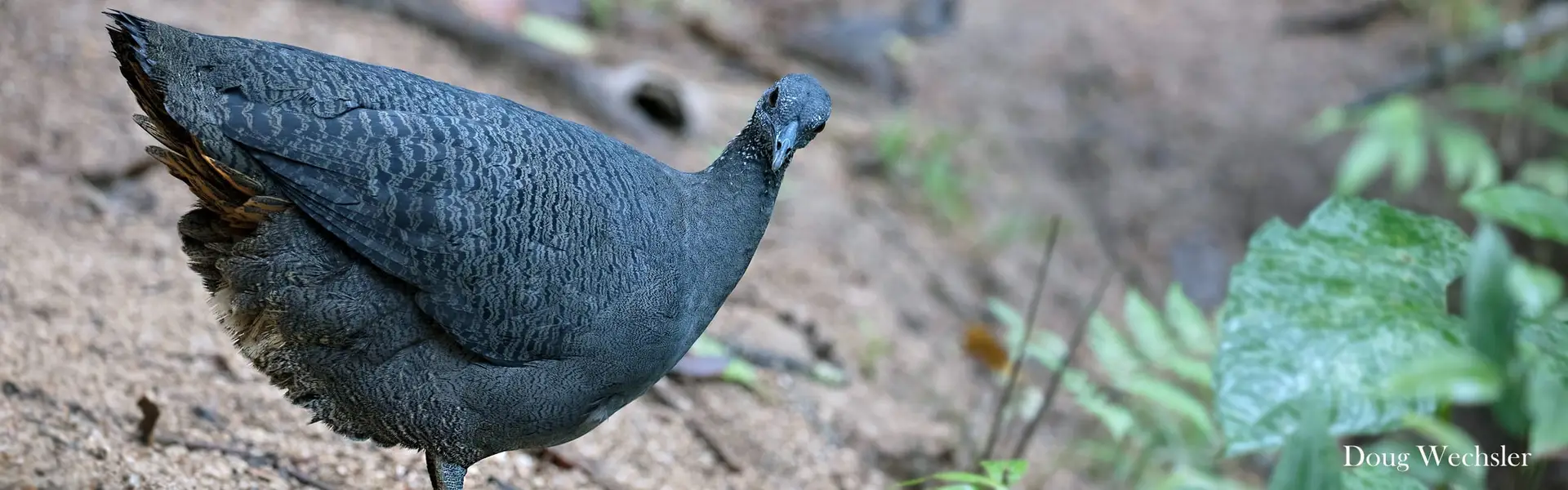
Ecuador · Tumbes–Chocó–Magdalena biodiversity hotspot
Their Only RefugeProtecting rainforest and wildlife corridors in Ecuador’s Chocó and Andes
Ecuador’s forests are the only refuge for species that evolved here. When those forests vanish, so can the wildlife that depends on them. In three landscapes, we work with local partners to protect standing forest and reconnect what’s been cut apart.
See how we’re helpingThe big picture
One of the richest, most threatened regions on Earth
The Tumbes–Chocó–Magdalena biodiversity hotspot covers about 106,000 square miles, from Panama through Colombia and western Ecuador to northwestern Peru. A region qualifies as a hotspot only if it has at least 1,500 plant species found nowhere else on Earth and has lost at least 70% of its native vegetation.
This one meets both. Few places on Earth have as many species found nowhere else, and few have lost as much of their forest.
- Vascular plant species
- 11,000
- About one in four occur only here
- Bird species
- Nearly 900
- About 110 occur only here
- Reptile species
- More than 320
- Nearly 100 occur only here
- Amphibian species
- More than 200
- About 30 occur only here
Zooming in
Ecuador’s Pacific forests
Within this hotspot, Ecuador’s Pacific forests run from the rain-soaked Chocó in the north to dry forest in the south. In between, seasonal and cloud forests in the coastal hills feed the streams and rivers that wildlife, farms, and nearby communities rely on.
Forest loss in western Ecuador
Oil and gas exploration, logging, plantation forestry, and urban development have cleared and fragmented much of this forest. A 2019 country profile ranked Ecuador second in Latin America for deforestation.
The loss threatens species found nowhere else and has pushed Indigenous peoples off their traditional lands. What remains is often broken into isolated patches.
Up to 98% of the native coastal lowland forest has been lost in western Ecuador and far northern Peru.

Orange-bellied euphonia
Euphonia xanthogaster
This brightly colored bird lives in western Ecuador and elsewhere in tropical South America.

Long-wattled umbrellabird
Cephalopterus penduliger
Found only in the humid forests of western Ecuador and Colombia. Males are known for the long, feathered wattle that hangs from the throat.
Our approach
Keep Ecuador’s forests connected
A small patch of forest cut off from everything around it can’t hold onto its wildlife for long. Animals need room to move, find mates, and keep populations genetically healthy. Since 2015,1 Saving Nature has worked with Ecuadorian partners to prevent extinctions by protecting the forest that remains and reconnecting the forest that’s been cut apart. That work also protects watersheds and the lands Indigenous communities depend on.
Where pasture divides the forest, we restore it
Where cattle pasture separates protected forests, we help buy the land and bring the forest back so wildlife can cross again.
Where roads threaten the forest, we block them
A new road opens intact rainforest to logging and clearing. We help buy land in its path so the forest stays whole.
Esmeraldas · Tumbes–Chocó–Magdalena
Río Canandé
Partner: Fundación Jocotoco
Strategy: Block roads, join reserves
2,690 acres protected through eight land purchases.
Read the project ↓Manabí · Tumbes–Chocó–Magdalena
Jama-Coaque
Partner: Third Millennium Alliance
Strategy: Restore forest on old pasture
2013 → 2018 Open pasture turning back into young forest.
Read the project ↓Eastern Ecuador · Tropical Andes
Bigal River
Partner: Fundación Sumac Muyu
Strategy: Block a road
600+ bird species in a reserve we helped expand in 2022.
Read the project ↓Project 1 · Esmeraldas · Fundación Jocotoco
Río Canandé: staying ahead of the roads
The long-term goal is to connect Río Canandé Reserve to Cotacachi–Cayapas National Park through unbroken rainforest.
One of the last large expanses of Chocó rainforest in northwestern Ecuador runs from the highlands down into the lowlands. In 2017, as logging roads pushed toward it, we began working with Fundación Jocotoco. Since then, we’ve funded eight land purchases covering 2,690 acres toward three goals.
Three goals
- Build a wildlife corridor. Join Río Canandé and Tesoro Escondido reserves so jaguars, harpy eagles, and great green macaws can move through a larger stretch of protected forest.
- Keep logging roads out. Use satellite images and drone surveys to find the parcels that, once protected, stop new roads before they open more of the Chocó to clearing.
- Buffer Indigenous lands. Protect forest near Cotacachi–Cayapas to shield Indigenous lands and local watersheds as logging advances.
Goal 1 · Results
Connect and expand the reserves
-
190 acres
The Revilla parcel closed the gap between Río Canandé and Tesoro Escondido, joining them into a single protected area of more than 11,000 acres.
-
59 acres
-
111 acres
-
About 885 acres
A grant from Saving Nature expanded Río Canandé.
Goals 2 and 3 · Results
A race against the roads
New roads can open standing rainforest to logging and plantation clearing. Between 2017 and 2018, our land purchases helped block road construction in the forest between Río Canandé and Cotacachi–Cayapas National Park.
The same purchases form a buffer for the Indigenous lands next door and the watersheds local communities depend on. Kichwa, Awá, and Chachi Indigenous communities and Afro-Ecuadorian communities live in this landscape, which is also home to jaguars, tapirs, and spectacled bears.
Land purchases that blocked roads and buffered Indigenous lands
-
341 acres
-
786 acres
-
122 acres
-
195 acres
Individual purchases are rounded to the nearest acre. The 2,690-acre total comes from the combined area of all eight acquisitions.
Who benefits
Wildlife of Río Canandé
Earlier surveys found 134 of the 212 amphibian and reptile species then known from Ecuador’s Chocó living in the reserve. Canandé sits within the Chocó Endemic Bird Area and the Verde–Ónzole–Cayapas–Canandé Important Bird Area, home to range-restricted birds such as the Baudó guan (Penelope ortoni). The original conservation assessment reported the largest population of a rare Ecuadorian tree at the reserve, Ecuadodendrum acosta-solisianum.
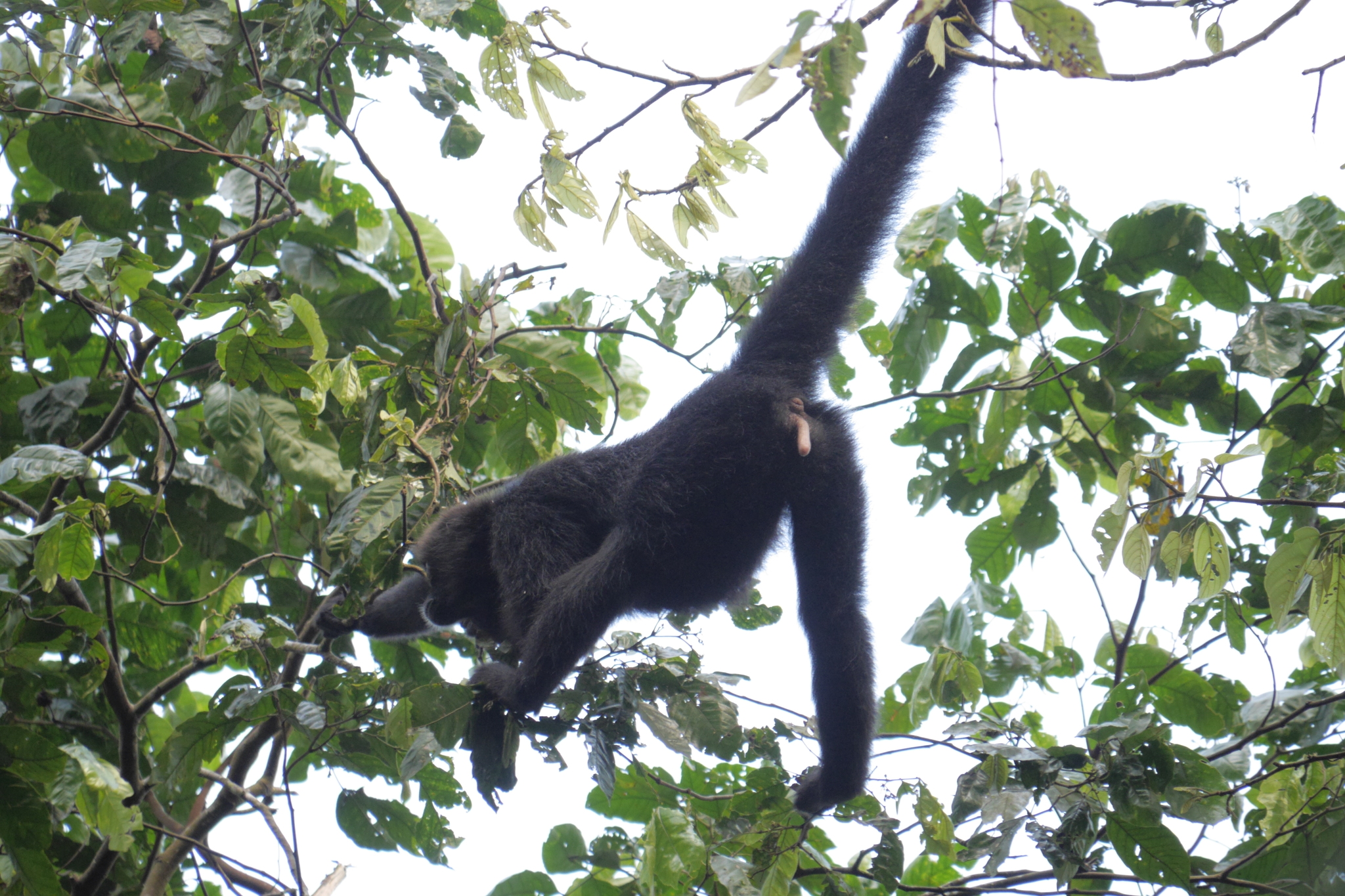
Brown-headed spider monkey
Ateles fusciceps fusciceps
Río Canandé is a stronghold for this Critically Endangered primate. A connected canopy lets it travel and feed without leaving the trees.
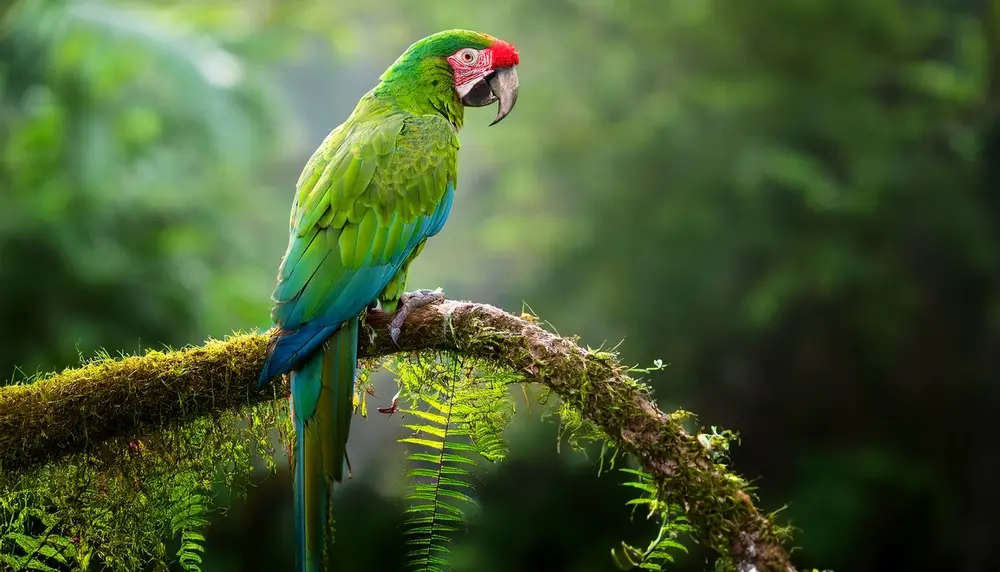
Great green macaw
Ara ambiguus
These macaws range widely. Connected rainforest gives them room to reach the trees they use for food and nesting.
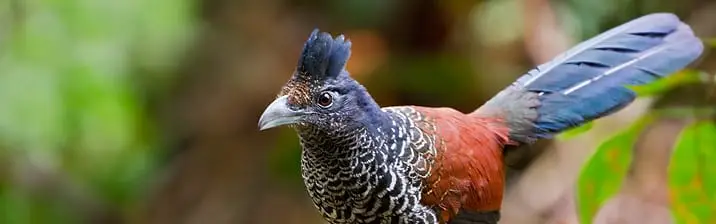
Banded ground cuckoo
Neomorphus radiolosus
This elusive bird forages near the forest floor in the humid Chocó forest that Canandé protects.
Project 2 · Manabí · Third Millennium Alliance
Jama-Coaque: bringing the forest back
Regrowing forest on old cattle pasture to reconnect two reserves.
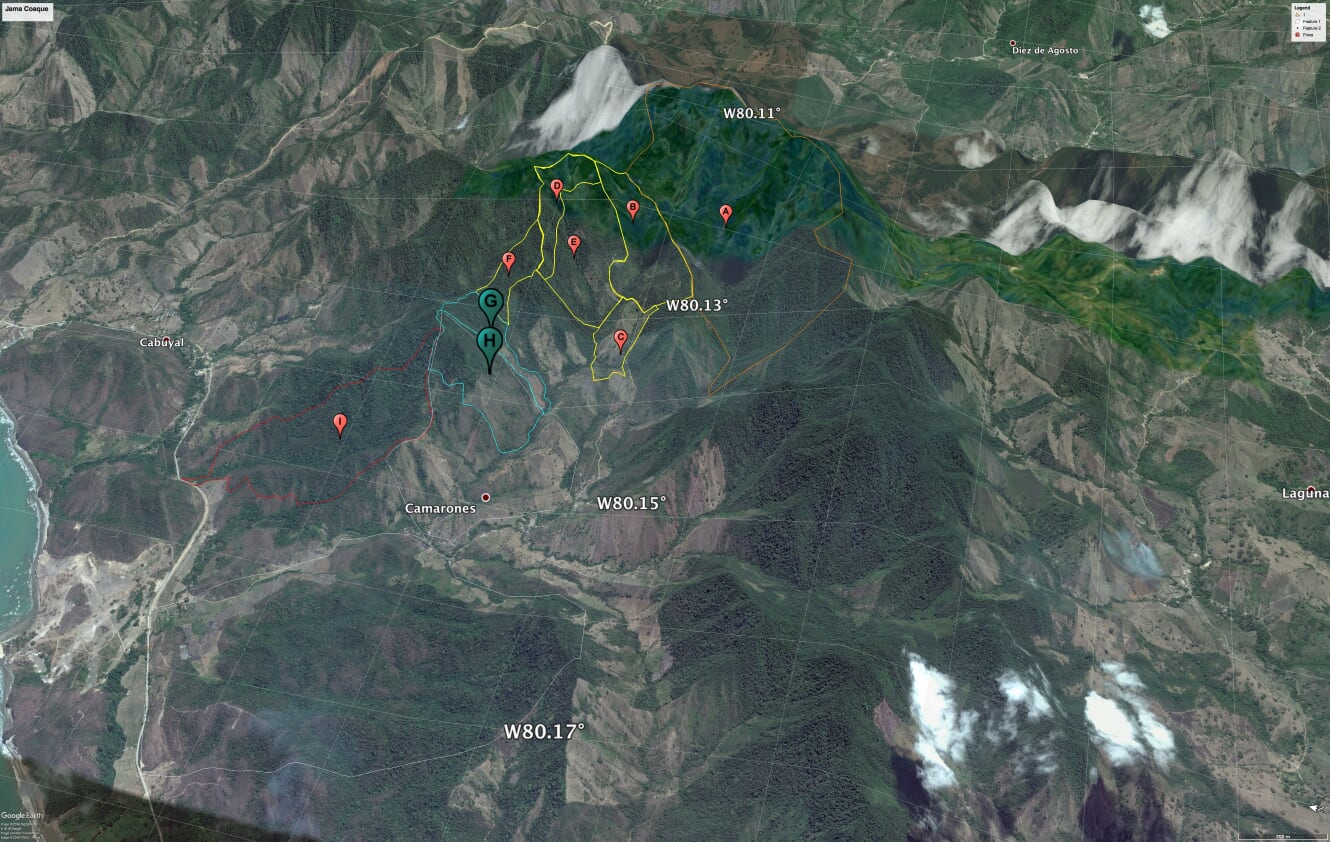
Farther south, in the coastal hills where seasonal forest meets cloud forest, the problem isn’t roads but pasture. Since 2015, we’ve supported Third Millennium Alliance in buying and replanting cleared land to connect the Jama-Coaque Reserve with Bosque Seco Labor Loor. As trees return, wildlife gains cover to move between forest remnants.
Third Millennium Alliance manages Jama-Coaque together with the community of Camarones. The forest protects local headwaters as well as wildlife.
Results
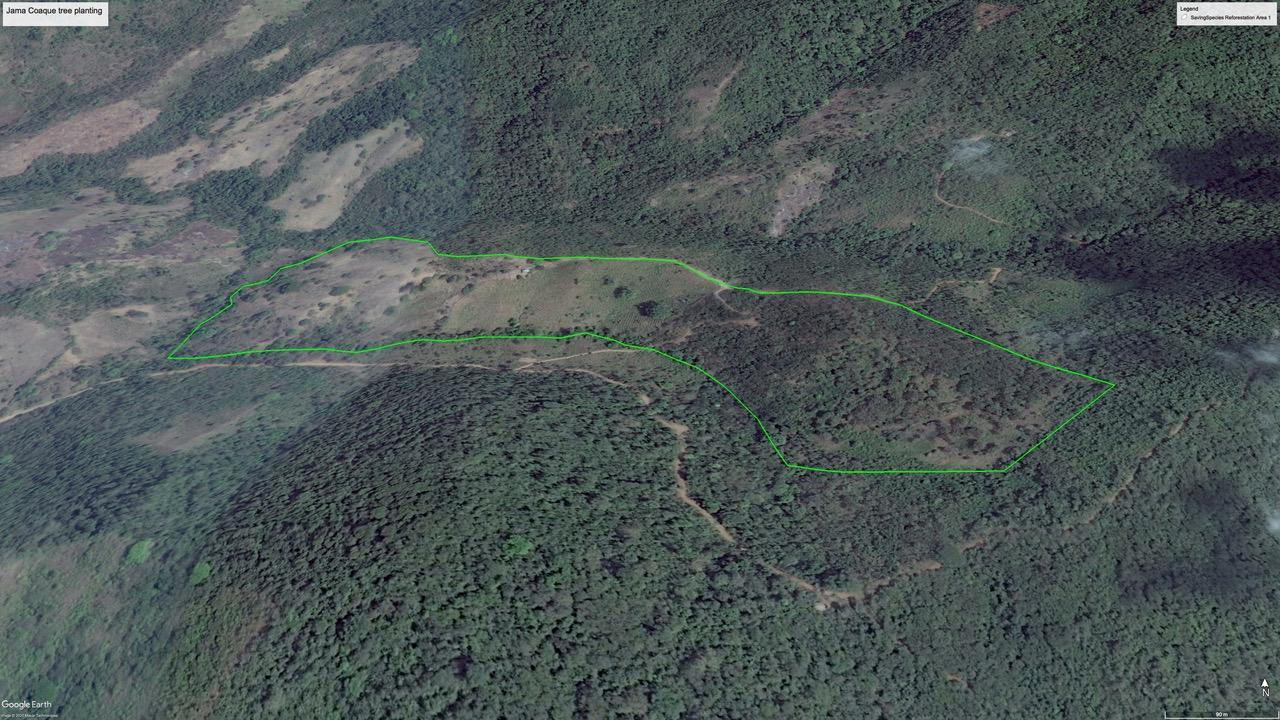
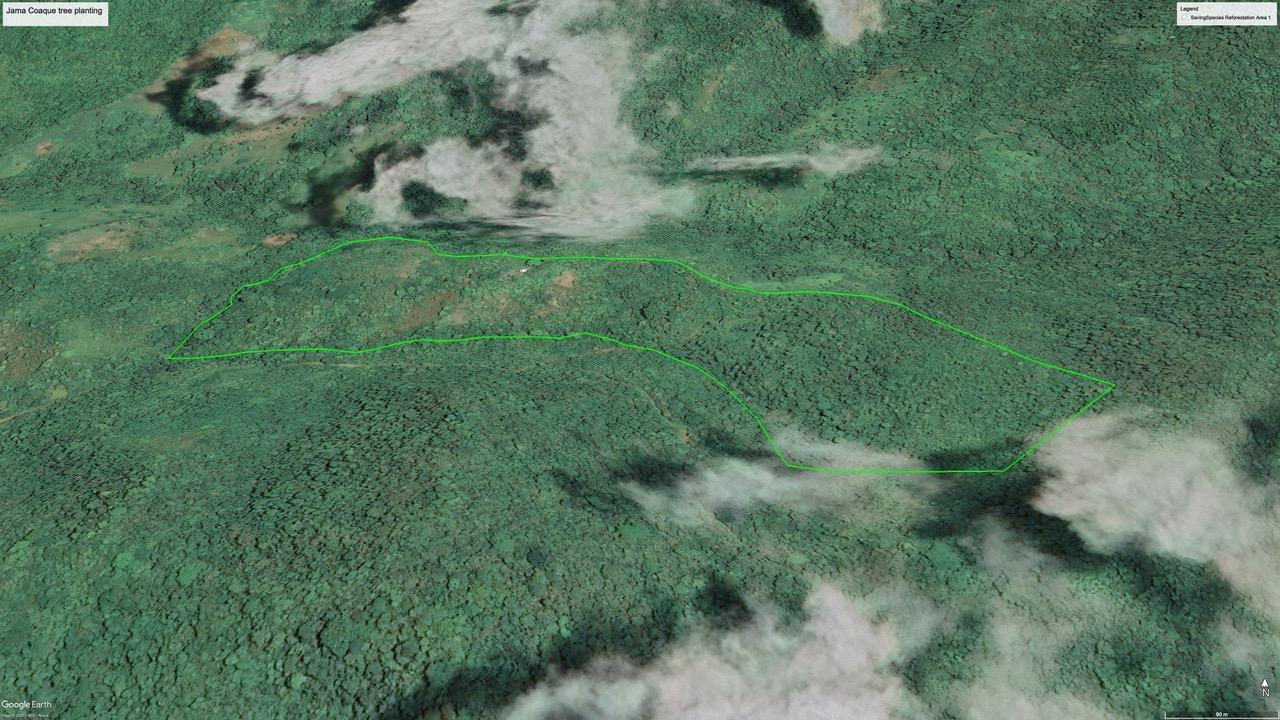
From pasture to young forest in five years
Aerial views of the same coastal hills show the change.
Who benefits
Wildlife of Jama-Coaque
Surveys have recorded 270 bird species, 47 reptiles, 18 mammals, and 28 amphibians here, including mantled howler monkeys, ocelots, the grey-backed hawk, the slaty becard, and the brown wood turtle (Rhinoclemmys annulata). Field notes from the cloud forest around Cerro Sagrado flagged three amphibians that may be new to science.
Wildlife is using the recovering forest. When we started camera-trap monitoring in 2018, early results included more than 200 images and 70 videos of 19 species, among them ocelots, coatis, crab-eating raccoons, and agoutis. Explore the camera-trap gallery
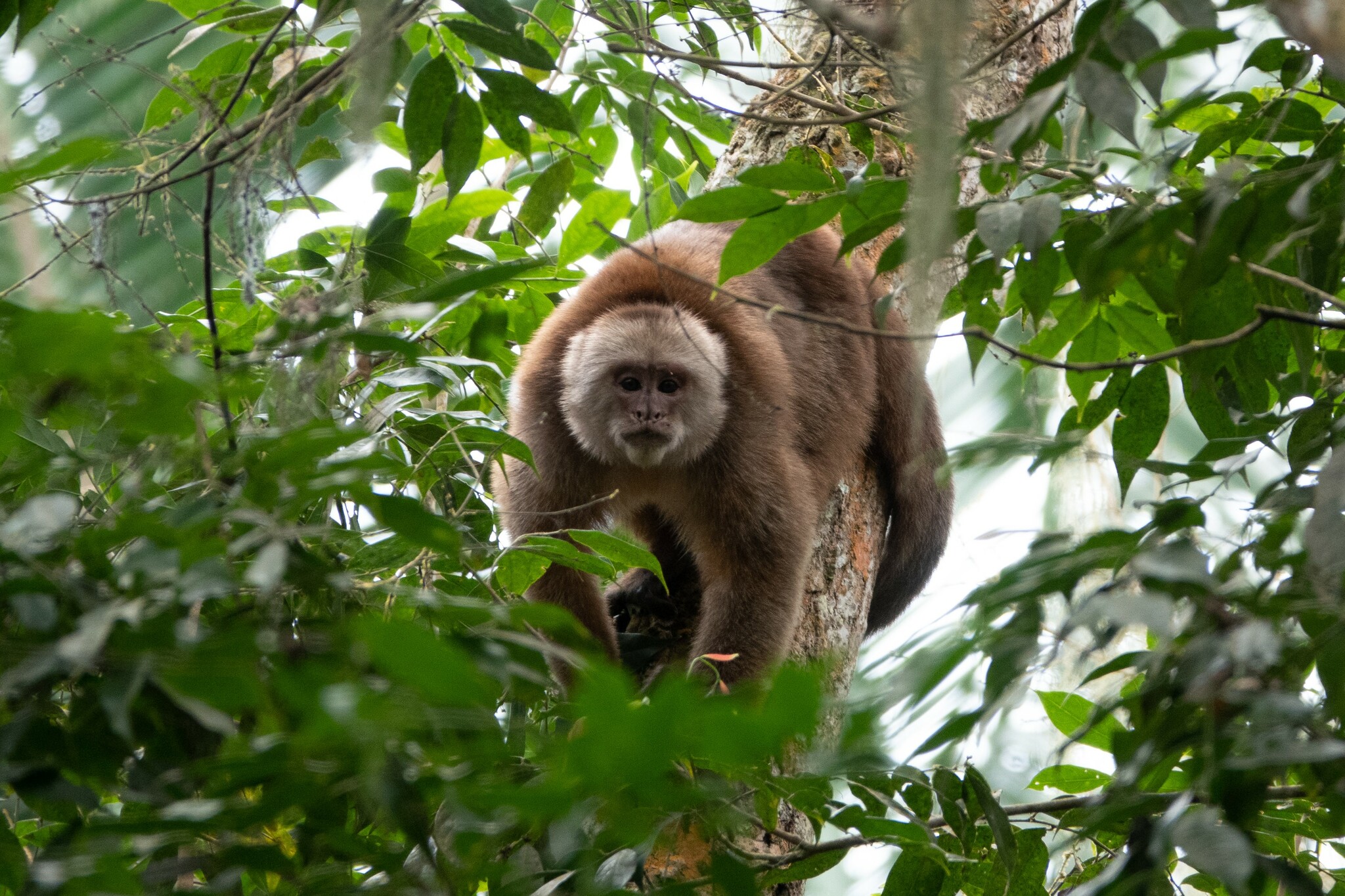
Ecuadorian white-fronted capuchin
Cebus aequatorialis
This Critically Endangered monkey lives in troops of 12 to 20. Forest growing back between reserves gives it more room to forage and move between patches.

Grey-cheeked parakeet
Brotogeris pyrrhoptera
Habitat loss and the pet trade have taken a toll on this bird. Jama-Coaque gives it refuge alongside other threatened birds of Ecuador’s coastal forests.
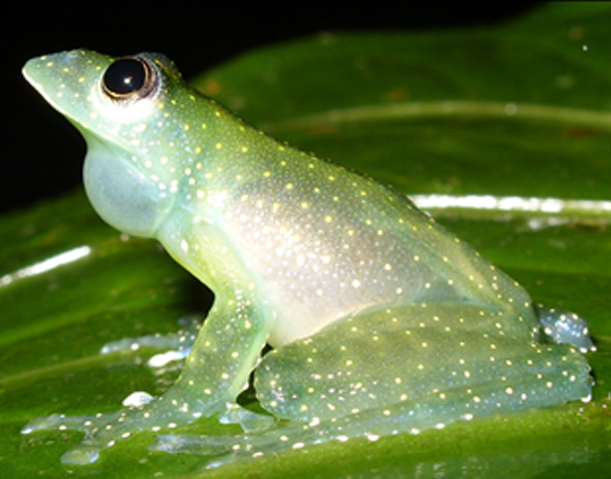
Mache glassfrog
Cochranella mache
This threatened glassfrog breeds along forest streams. Protecting the forest around those streams protects its nurseries.
Project 3 · Eastern Andes · Fundación Sumac Muyu
Bigal River: where the Andes meet the Amazon
Blocking a road to keep forest connected from mountains to lowlands.
This project lies across the Andes from the Pacific coast, in the neighboring Tropical Andes biodiversity hotspot. The threat is the same one we faced at Río Canandé: a road.
On the Amazon side of the Andes, the Bigal–Payamino corridor links the forested slopes of Sumaco Napo–Galeras National Park with lowland Amazon forest cared for by the Indigenous community of San José de Payamino. Fundación Sumac Muyu is working to close the gap between the San José de Payamino and Ávila de Huiruno Indigenous territories and to protect the park’s eastern edge.
In July 2022, Saving Nature helped Fundación Sumac Muyu buy land that was added to the Bigal River Biological Reserve. The purchase stopped a proposed road before it could open more forest to logging, pasture, and plantations.
The reserve has recorded more than 600 bird species, including the military macaw, coppery-chested jacamar, and foothill elaenia. Much of that diversity comes from the range of habitats between the foothills and the lowlands, which is why keeping them connected matters.
Donate to protect Ecuador’s rainforest
Your gift buys land in the path of roads, restores forest on old pasture, and reconnects reserves for capuchins, spider monkeys, jaguars, and great green macaws. So far, that work has protected 2,690 acres at Río Canandé, regrown forest at Jama-Coaque, and stopped a road at Bigal River.
100% of donations go to conservation projects; operating grants cover our overhead. Saving Nature is a 501(c)(3) nonprofit, and gifts are tax-deductible as allowed by law. We accept card, check, stock, crypto, and donor-advised fund gifts.
Questions donors ask
Is western Ecuador a biodiversity hotspot?
Yes. Western Ecuador is part of the Tumbes–Chocó–Magdalena biodiversity hotspot, which covers about 106,000 square miles from Panama to northwestern Peru. It holds about 11,000 vascular plant species, roughly one in four found nowhere else, and up to 98% of the native coastal lowland forest has been lost.
What has Saving Nature achieved in Ecuador?
With Fundación Jocotoco, we funded eight land purchases covering 2,690 acres, joining Río Canandé and Tesoro Escondido into a protected area of more than 11,000 acres and blocking logging roads. At Jama-Coaque, open pasture turned into young forest between 2013 and 2018. At Bigal River, a 2022 land purchase stopped a proposed road.
Who are your partners in Ecuador?
Fundación Jocotoco at Río Canandé, Third Millennium Alliance at Jama-Coaque, and Fundación Sumac Muyu at the Bigal River Biological Reserve.
Why do wildlife corridors matter?
Animals cut off in isolated forest patches lose room to move, find mates, and keep populations genetically healthy. Connecting reserves helps prevent local extinctions and protects the watersheds and Indigenous lands that depend on the forest.
Where does my donation go?
Operating grants cover Saving Nature’s overhead, so 100% of donations go to conservation projects such as land purchases and forest restoration.
Is my gift tax-deductible?
Saving Nature is a 501(c)(3) nonprofit, and donations are tax-deductible as allowed by law. You can give by card, check, stock, crypto, or donor-advised fund.