All Conservation is Local


March 4, 2020
A FILM BY JAMES ROBINSON
March 4, 2020
A FILM BY JAMES ROBINSON and JACOB LEVINE
February 5, 2020
Andrew Schiffer takes a global tour of the world’s greatest forests and makes the case for taking “remote ownership” of their protection. His call to action encourages people to learn more about the world around us and get involved in saving these special places.
by Andrew Schiffer
With limited funding and climate change upon us, conservationists must decide which forests to focus on and preserve. Although every forest possesses its own value, in order to prioritize funding, it is critical for our humanity to identify ‘biodiversity hotspots’ where the highest concentrations of endemic species are facing the largest loss of habitat.
I have narrowed down the candidates to five particularly vital hotspots: Brazil’s Atlantic Forest, Choc/Darien/Western Ecuador, Western Ghats/Sri Lanka, Indo-Burma, and the Tropical Andes.
These hot spots all contain a treasure trove of critical, different wildlife and plant species. In addition, many of them are brimming with life endemic only to the area. In learning more about these crucial hotspots, specifically about the statistical number of species that inhabits each area, we will learn some important facts that are compelling for each of us to take “remote ownership” and learn more.
These numbers are more shocking when “In contrast, the United States and Canada, with an expanse 8.8 times larger than the 25 hotspots combined, have only two endemic families of plants.” Although we are providing a brief overview of the importance of conserving each forest, there is still a lot to learn and we encourage you to explore the Saving Nature website to learn more and hopefully be inspired to carry out some research on your own!
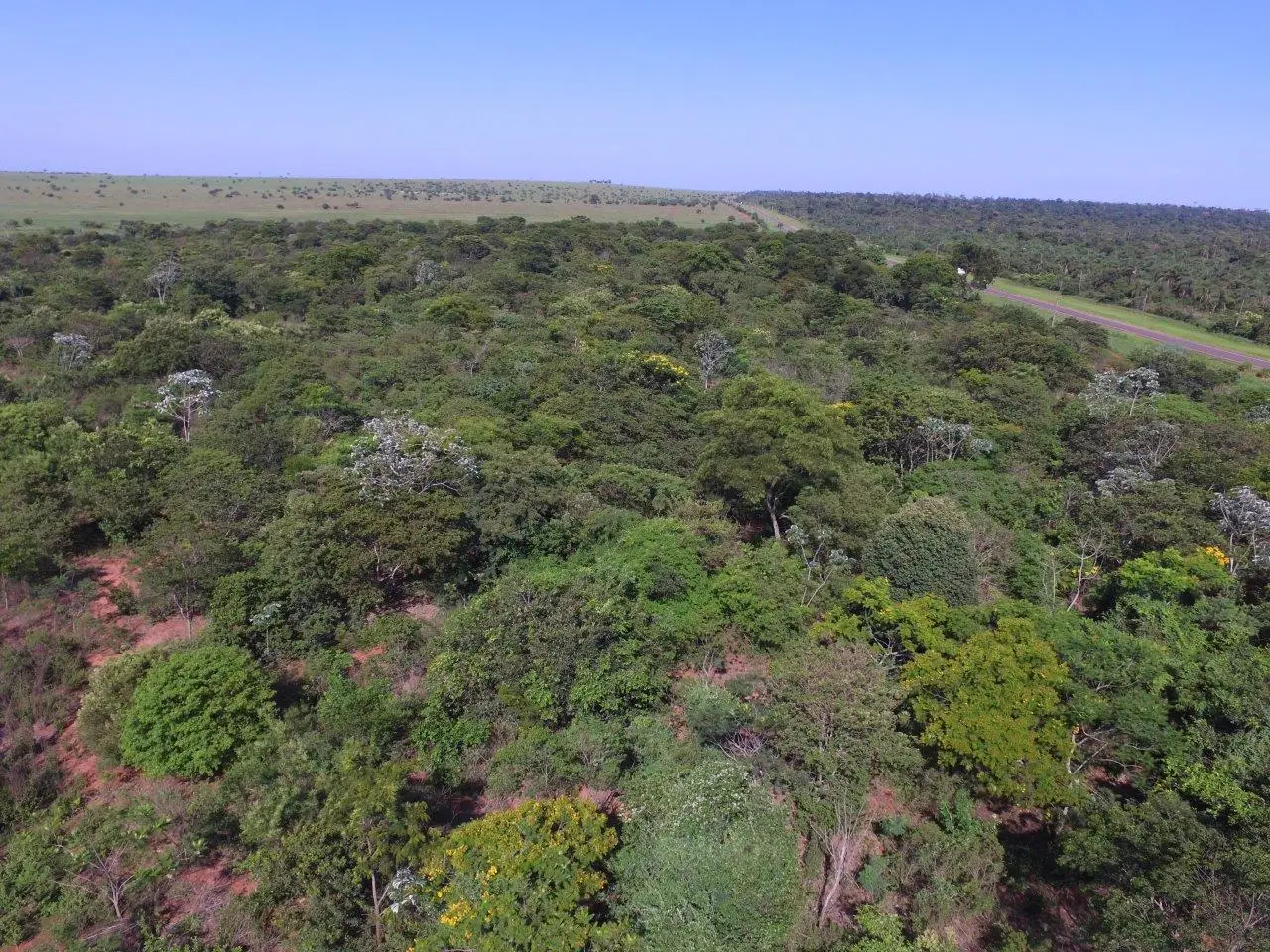
First off, Brazil’s Atlantic Forest makes up such a huge amount of the Earth’s surface that it contains two of the world’s largest cities: Rio de Janeiro and Sao Paulo. The forest spans over 3,000 km along the coast of Brazil and into Paraguay and Argentina. The forest is home to the biggest big cat in South America, the jaguar, as well as two indigenous tribes: The Tupi and the Guarani. In 1832, Charles Darwin explored the forest during his expedition on the Beagle. The forest is also home to over 2% of both the world’s endemic plants and vertebrates. It boasts the third largest number of endemic plants in the world, topping 8,000. However, in the face of growing threats, the forest has recently lost all, but 7.5% of its original primary vegetation and species, threatening the very existence of the native Jaguar.
The Tropical Andes, also located in South America, stands as an equally special woodland. Holding over 20,000 endemic plants as of yet discovered; the forest has long fascinated scientists. 1,666 bird species call it their home, a number that far exceeds any other hotspot in the world. Furthermore, the Tropical Andes contains at least 2% of the total endemic plants and vertebrates worldwide. With jaw-dropping statistics such as this, as well as 6.7% of all plant species extinct, we must give it our utmost attention.
Rounding out the South America candidates, the Choco/Darien/Western Ecuador forest presents its own case for being saved, struggling to maintain the mere 4.9% of its primary vegetation that remains. Due to its isolation, the forest is particularly attractive to endemic life. This stems from the forests on the western side of the Andes having evolved entirely differently from their counterparts on the eastern side.
The numbers are quite staggering: 830 birds (85 endemic), 235 mammals (60 endemic), 210 reptiles (63 endemic), and 350 amphibian species (210 endemic). Without question, the forests are one of the primary sources of endemic life. They also contain 0.8% of the global total of endemic plants and 1.5% of the world total endemic vertebrates.
They run along the entire Columbian coast and are made up of mountains, rain forests, and coastal areas. Species include jaguars, ocelots, giant anteaters, tapirs, and tamarins. The adorable cotton-top tamarin can only be found there and could risk extinction without our immediate intervention. Such profound data compel us to consider the Choco/Darien/Western Ecuador Forest’s significance.
As we travel to the 2 million km of tropical Asia and the lowlands of the Mekong Delta in Vietnam, we find the Indo-Burma forests. With 1,170 bird species, 329 mammal species, 202 amphibian species, and 484 reptile species, these forests contain many of the world’s great animals: leaf deer, kouprey, white-eared night-herons, Mekong giant catfish, and Jullien’s golden carps to name but a few.
Nearby stretches the last of the five highlighted forests: the Western Ghats/Sri Lanka forests. The Western Ghats region of India contains more than 30% of all plant, fish, herpetofauna, bird and mammal species found in the country, yet account for less than 6% of the national land area. Once again the numbers are staggering: 528 bird species (40 endemic), 140 mammal species (38 endemic), 259 reptile species (161 endemic), 146 amphibian species (116 endemic). Species include the mountain shrew, the slender loris, the grizzled squirrel, Layard’s striped squirrel, 144 aquatic birds, the black-spined toad, the skittering frog, the Indian bullfrog, and the Malabar torrent toad.
Furthermore, these forests are home to 0.7% of the world’s endemic plant species. In 200 square kilometers, you’ll find an average of 35 species of plants found nowhere else on earth. You’ll also find 1.3% of the world’s endemic vertebrates – that’s an average of almost 6 species found only here. With only 6.8% of its primary vegetation remaining, the Western Ghats/Sri Lanka forests call out for our help.
If we do not help save these one of a kind, crucial, magical places, the world will face mass extinction, causing millions of species to die out. This will cause an alarming imbalance in our ecosystem and cause unforeseen damage to our ecosystem and our daily life as humans. While we may feel comfortably safe here now, and these magical forests may feel far away, still there is a crucial role each of us can play in saving our magical, treasured species, and in saving nature. Feel proud and be a part of this vanishing opportunity—do not stand idly by! Thankfully, and excitedly, together we can all play a critical role in saving nature. YOU HAVE MADE A GREAT FIRST START IN LEARNING MORE.
Although they are far away for many of us, these forests contain some of the most important endemic species and vegetation in the world. We need to answer the call! It is time to come together as one and explore ways to support conservation efforts. It is daunting to take on the task of conserving the world. Common questions are likely to come up: How do we get started? What are the most important places? How could my effort even make a difference? Very little information is provided to us directly about actual concrete ways to make real, effective change. It can be difficult to know how to make a real difference and ensure that your hard work will be effective. Well, not only can you make a difference, but we can help you get started today.
There are many great organizations out there. One that is particularly relevant is Saving Nature because, coincidentally, it is focused on saving the very same forests we just talked about. Go for a life-saving adventure and explore their projects. Together, we can save our planet, one forest at a time. Together, we can help zero in on helping save the most important hotspots in the world and make real, lasting beautiful change. Do not stand idly by—you can make yourself and our planet earth proud! Along with your other great qualities, you are now a proud nature-saver! If we do not act now, there will not be enough time to save these magical, critical species and our planet. Please kindly act now and help Saving Nature. Grateful for you, nature-saver!
Saving Nature works in biodiversity hotspots around the world to prevent extinctions and fight climate change. Guided by science, using annual surveys with drones and camera traps, we show donors where the forests and species are returning.
January 7, 2020
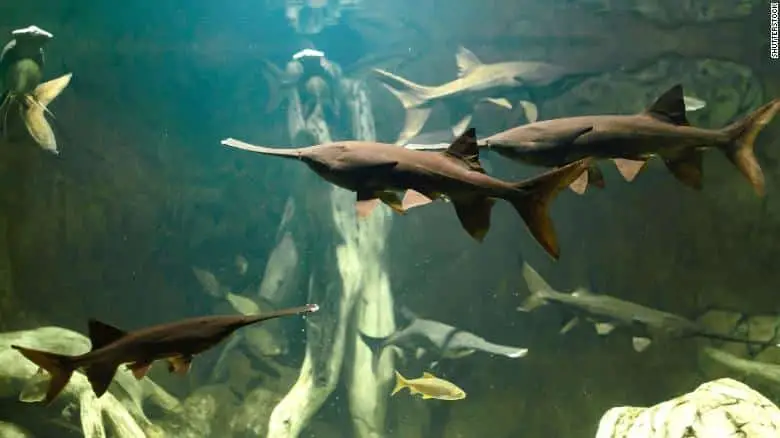
The world has officially lost another species to extinction after fisheries experts in China add the Chinese paddlefish to the list. One of the largest freshwater fish species, which had survived for millions of years, it hasn’t been seen since 2003.
According to a report in CNN, the Yangtze River in China has lost one of its oldest inhabitants – the Chinese paddlefish, one of the largest freshwater fish species, has been wiped out by overfishing and habitat fragmentation.
The Chinese paddlefish, which is believed to have lived since the Lower Jurassic period around 200 million years ago, hasn’t been seen for over a decade. Sadly, it is unlikely to be the last species lost the the planet forever.
December 9, 2019
As the world continues to lose species 1,000 time faster than normal, Saving Nature’s Stuart Pimm reflects on what we have learned about how many species we’re losing, where we are losing them, and how well we’re protecting them.
In this article for VOX.com. Brian Resnick makes the case that humans are killing earth’s biodiversity, now adding climate change to the list of causes.
He collectively eulogizes the 467 species have been declared extinct and calls attention to others precariously teetering on the brink, and those experiencing serious declines in their population numbers.
The article highlights the casualties of the extinction crisis, the underlying causes for the loss of biodiversity, and the possibility of rescuing species from their current plight through thoughtful conservation interventions.
November 12, 2019
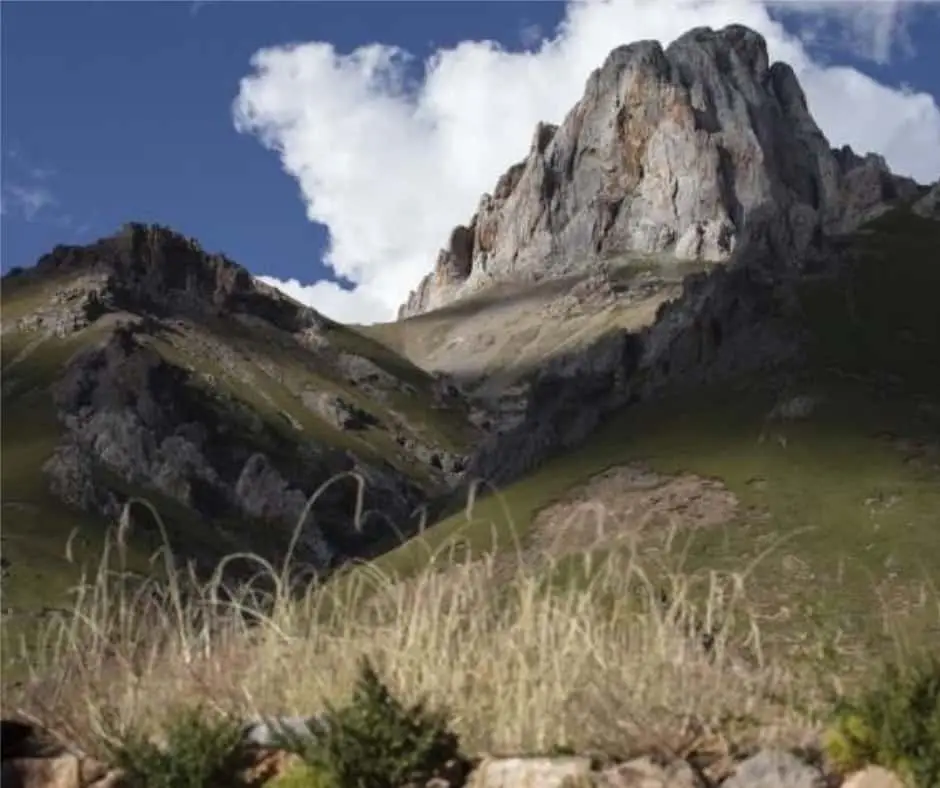
In this article published by Phys.org, Saving Nature’s Dr. Stuart Pimm was asked to share his perspective on China’s ambition to create a unified park system that balances conservation and tourism, while safeguarding community livelihoods and culture.
As China continues to expand into previously remote areas of the country, there is a new ethos emerging. In their modernization push to transform the Tibetan Plateau, there is now a new dimension to government planning – conserving natural resources.
The Chinese government is working to set limits on the region’s growth in order to implement its own version of one of the U.S.’s proudest legacies—a national park system.
The ambition to create a unified park system represents “a new and serious effort to safeguard China’s biodiversity and natural heritage,” Duke University ecologist Stuart Pimm says.
The vision is not without challenges, as explained in this month’s article in Phys.org. Read the full article here.
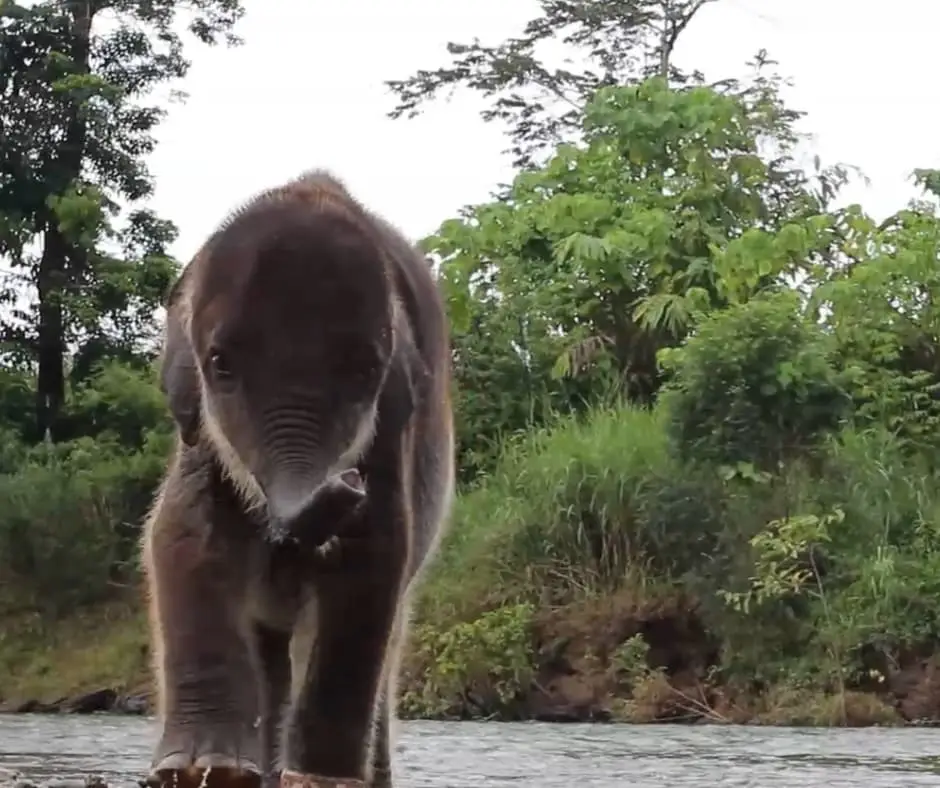
Sadly, Salma died from her injuries sustained from a poacher’s snare on early on Friday, February 7, 2020. We are very saddened by this senseless loss. In sharing the news about Salma’s passing, Rudi Petra writes:
“Forgive us for failing to return you to the mother who gave birth to you, Salma. We understand your longing for your mother & best friends. We know the task of saving you is only a small part of the burden we carry. We will never give up. We will continue to fight and protect your relatives, families that are still alive and your home. We believe that one day we can save them from extinction, because only by protecting the place you play we can survive for life. Rest in peace Salma.”
We share the story of her rescue to honor those who work tirelessly to save her.
June 16th, 2019
by Rudi Petra, Leuser Conservation Forum (FKL)
In the afternoon of June 16th, 2019, a local community member notified Leuser Conservation Forum (FKL) staff that a baby elephant had been caught by a snare on her leg at a village in rural part of Aceh Timur. At that moment, our staff contacted a veterinarian to save this baby elephant. The next day, the mission to save the elephant began.
Elephants are known to be very smart, and instinctively find a way to save injured members of their group. Working in the Leuser Ecocystem, the FKL rangers get calls about elephants bringing their injured young to an area nearby a community village – maybe hoping someone will help rescue them. Several rescue missions the FKL rangers have conducted with Aceh’s Natural Resources Conservation Agency have been very close to settlements.
A recovery team set out, following the footsteps of the baby elephant, including FKL’s Elephant Protection Team, the veterinarian, Aceh Natural Resources Conservation Agency staff, Forest Management Unit Regional 3, and local community members.
After two days of tracking the baby elephant through the forest, parts of her footsteps were lost….The team became more and more hopeless, but remained determined to continue until they found and treated the baby.
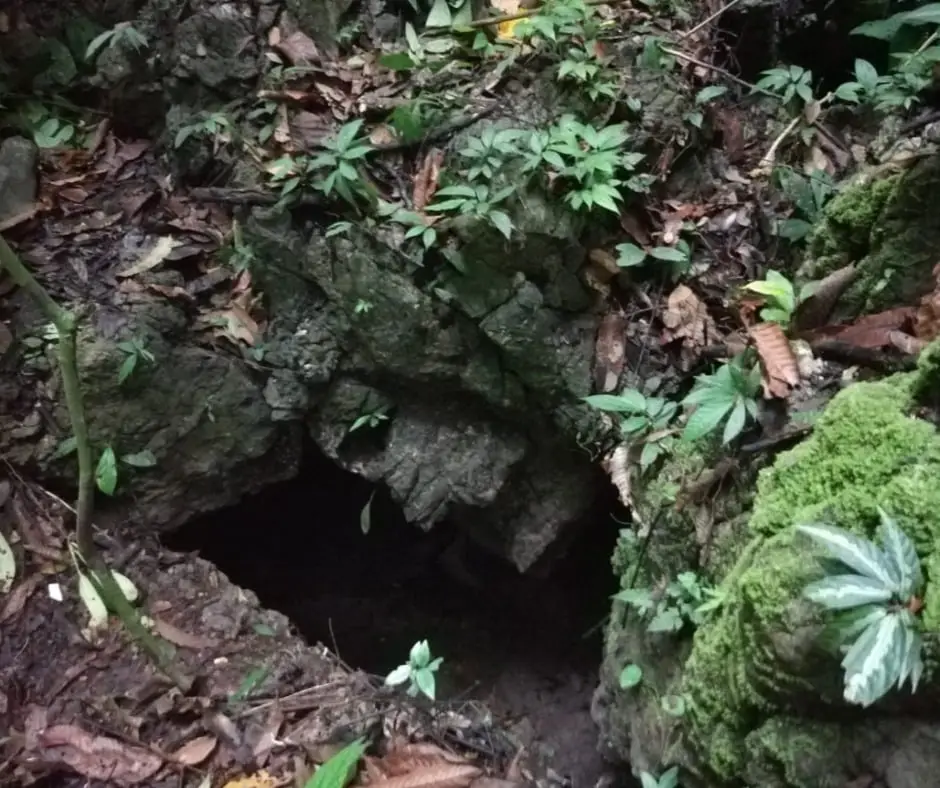
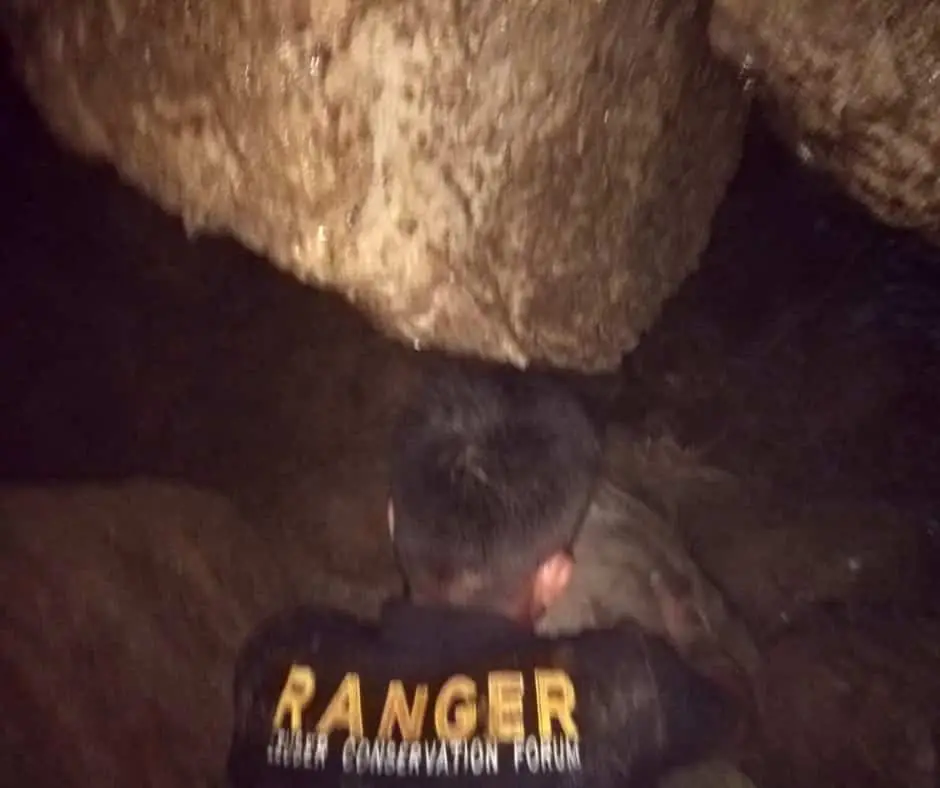
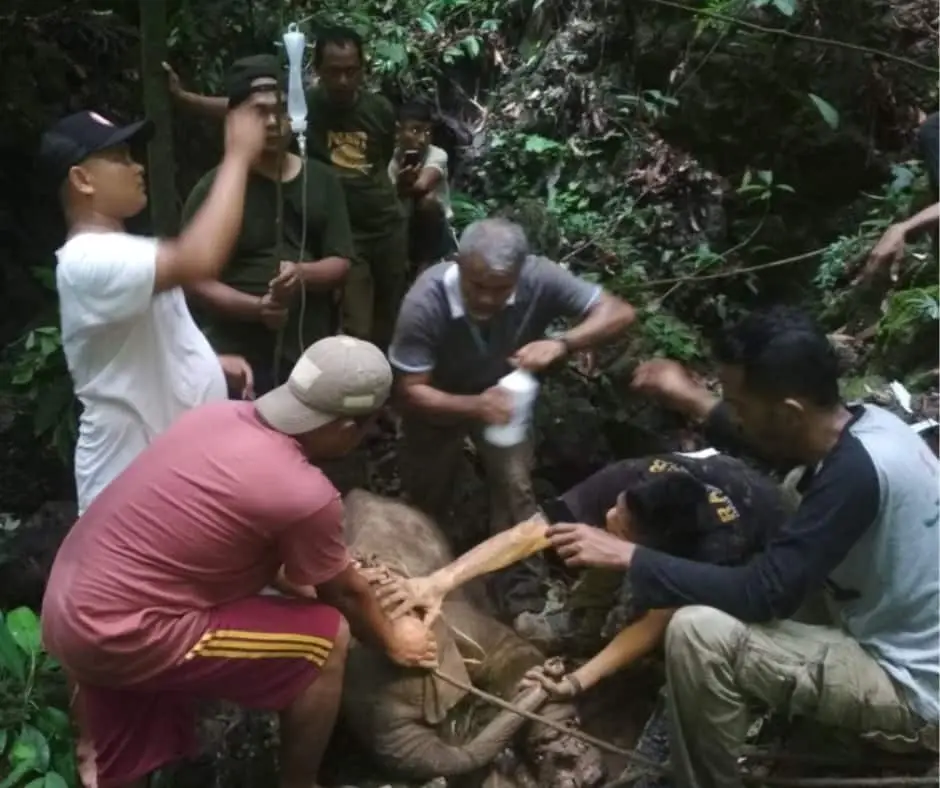
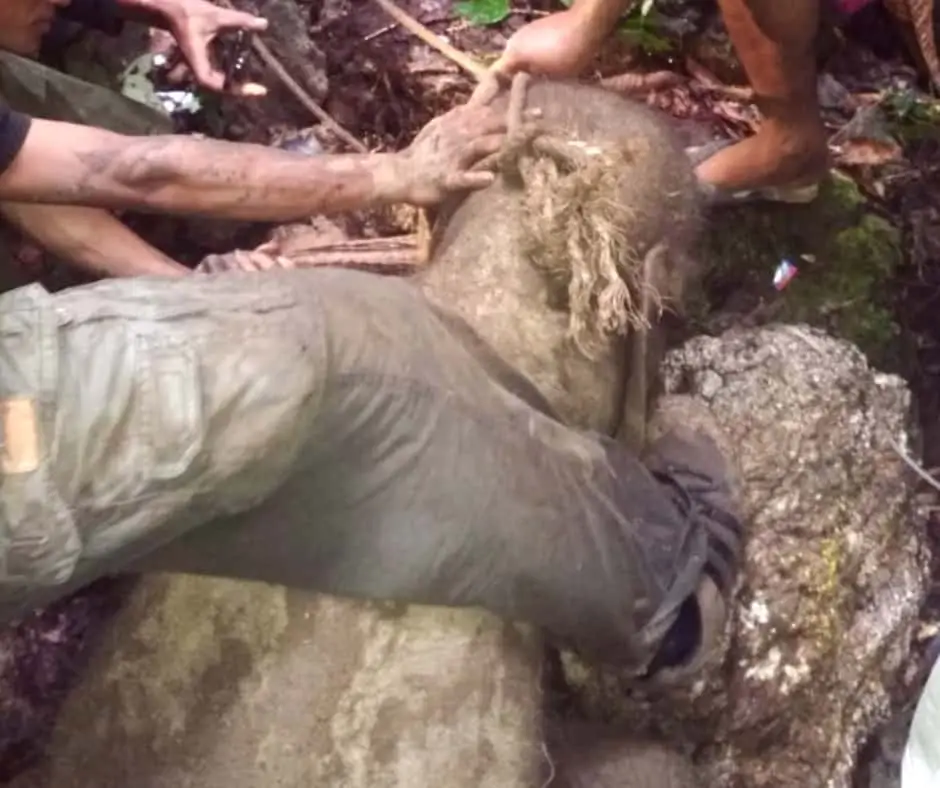
The team continued to search and walked until they came across a hole approximately 2 meters deep. It was inside this hole, a soft sound was heard.
The team tried to find the source of the sound, and that is where they found the weak baby elephant. Lying there distraught, maybe the elephant is no longer able to walk and wants to end her life there until her final breath.
Two members of the Elephant Patrol Team braved themselves to enter the cave to save the elephant, but her rescue was far from certain. Despite being very weak, the injured baby elephant still showed her wild nature.
With two rangers pushing below in the darkness of the cave, and another dozen using ropes from above, the team tried their very best to pull Salma from the hole.
FKL’s team of 148 trained rangers patrol 13,500 square kilometers in Sumatra’s Leuser Ecosystem. In 2018, they found 843 snares set by poachers targeting protected wildlife.
In 2019, FKL’s rangers rescued 3 elephants and 1 sun bear caught in snares. They also recovered 2 hornbills and 1 orangutan from villagers intending to sell them on the black market.
Sumatran elephants, rhinos, tigers, pangolins, helmeted hornbills, and orangutans are all listed as Critically Endangered on the IUCN Red List. Their populations are declining worldwide due to poaching and habitat loss. As they disappear from other forests, the survivors face even more pressures. International poachers move into the last places where supply can be found for body parts for the Chinese black market.
Poaching is rising at an alarming rate in the last of Sumatra’s forests, with an influx of hunters from Central Sumatra and other Asian countries targeting elephants, rhinos, tigers, pangolins, hornbills, and wild birds.
With insatiable demand on the black market for tusks, horns, feathers, skins, and other body parts used in traditional medicine, cultural rituals, and decorative arts, species are moving closer to extinction.
The Leuser Ecosystem offers one of the last places where there is hope to rescue them from the brink of extinction. Connecting the two large remaining protected areas will help enormously. Restoring forests hinders access deeper into untouched areas. Returning failed farms and plantations to forest is vital to a sustainable future.
But time is critical in the race against the relentless demand. As the forests continue to recede, access becomes easier for poachers. Already driven to extinction in other parts of Indonesia, these vulnerable species, the last of their kind on earth, are now in the cross hairs.
In 2018, Saving Nature launched a 3-year initiative to build a wildlife corridor in Leuser to combat the loss of habitat, reestablish elephant migration routes, and build a buffer against poachers.
Our long-term goal is to connect a 5,500-ha area recently designated by the government as an elephant conservation area with nearly 300,000 ha of protected forest.
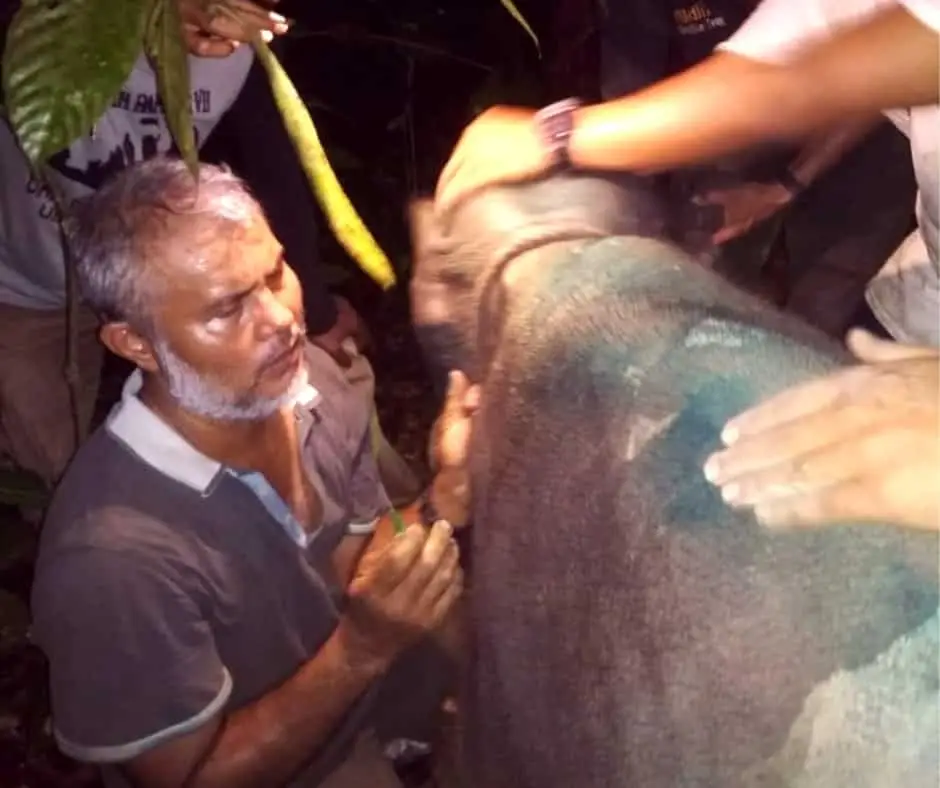
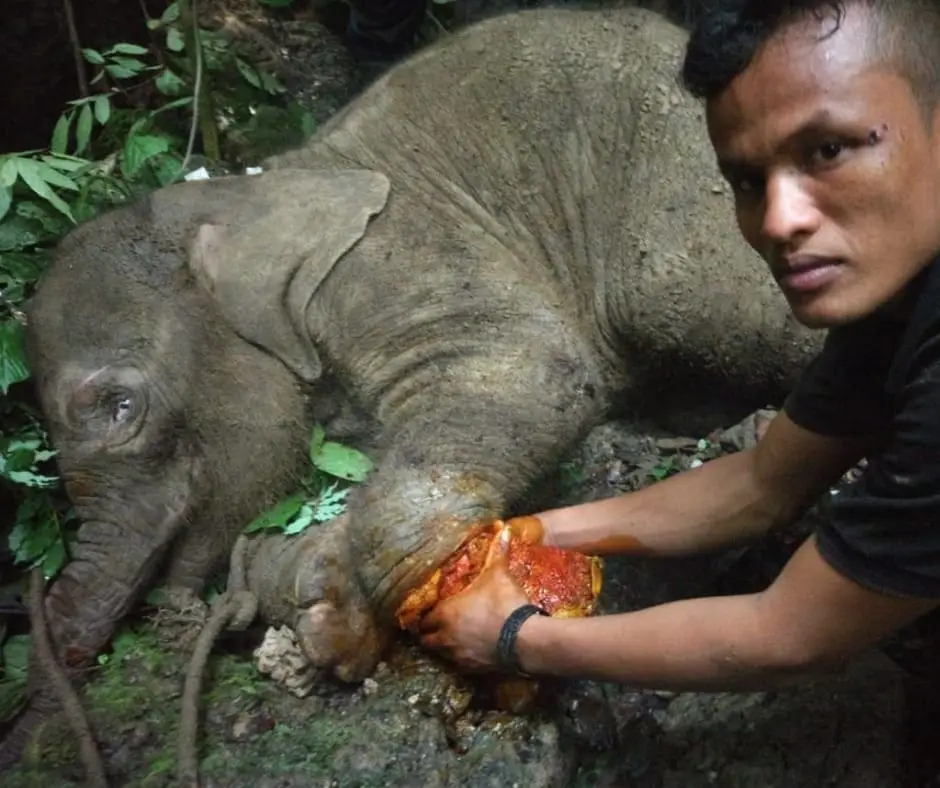
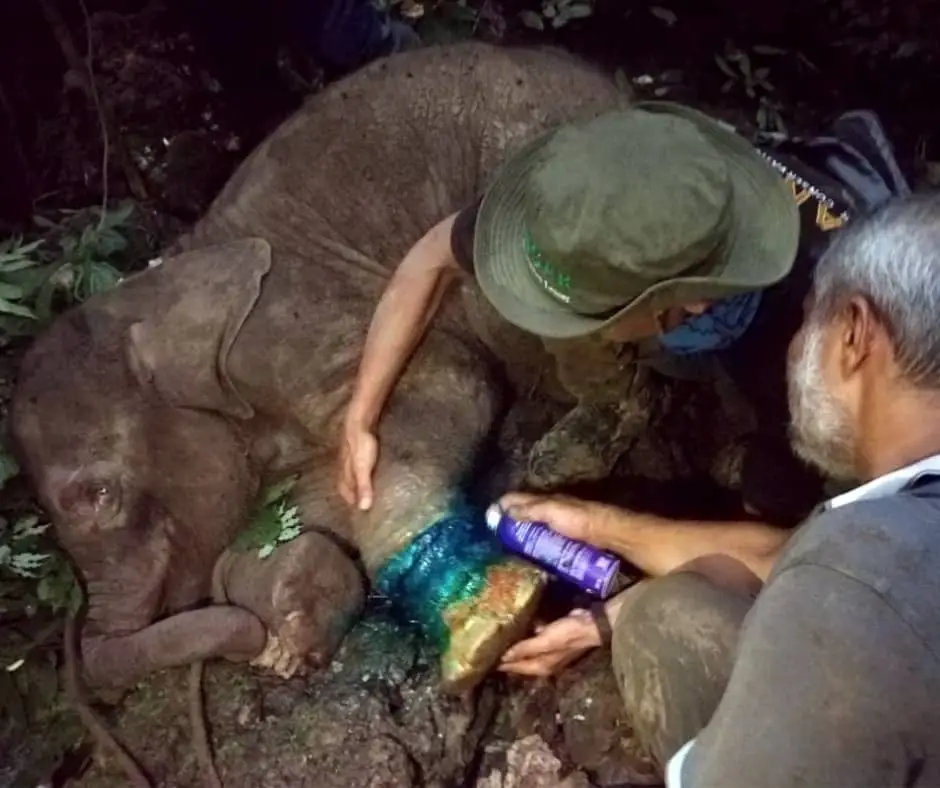
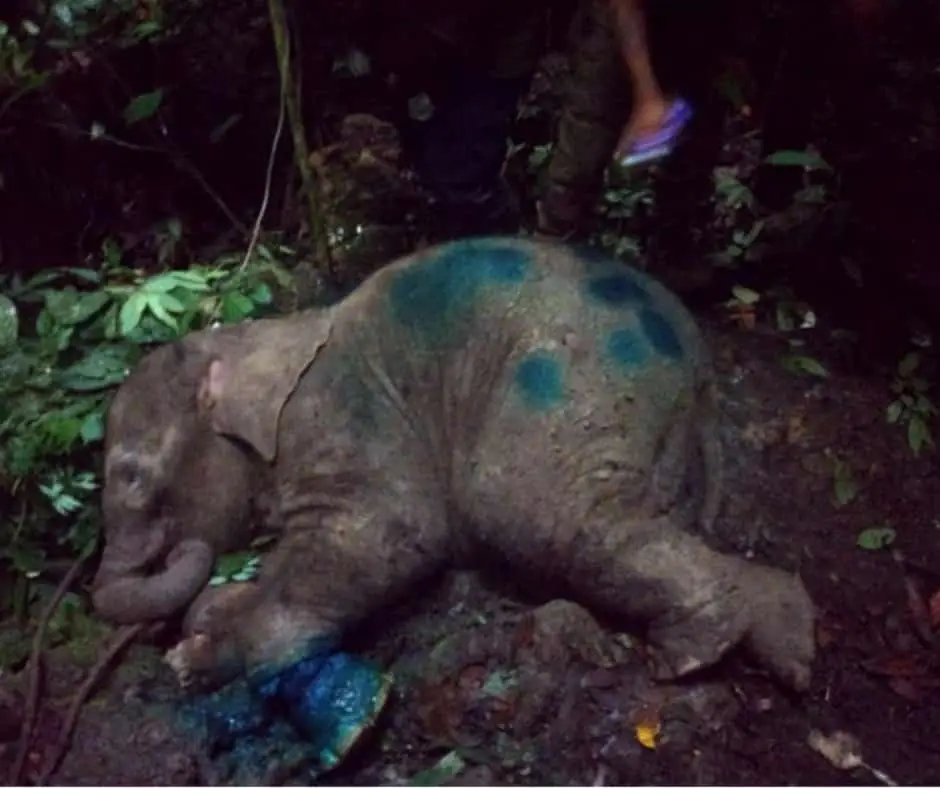
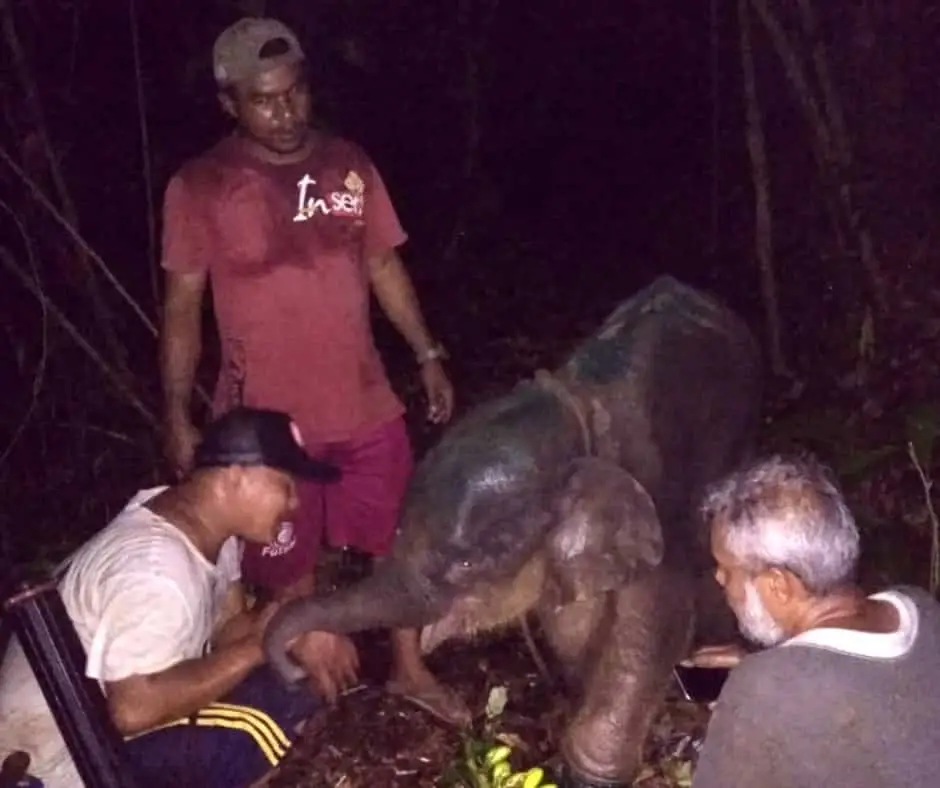
Finally, at 5 o’clock in the afternoon, the elephant was out of the dark cave. The veterinarian immediately injected anesthesia into the elephant, and worked to remove the snare, clean, and treat the wound.
The snare resulted in a very deep wound that came close to injuring the bones. Infection also could have killed this amazing creature.
We were very pessimistic looking at the condition of this baby elephant, but whatever the risk facing ahead, this elephant must be saved.
To evacuate this little elephant was no easy feat. The location was very far from the nearest settlement. The team used a boat to go along the river to the closest settlement before it is brought on to a car.
In the middle of the night, we received help from the local community who provided the boat that is then used to bring the elephant. The elephant’s long journey began. To reach the closest settlement took 2 hours, then a 7-hour drive on land.
It was not over yet. ..
The elephant took another boat ride to reach the elephant camp, Conservation Research Unit (CRU) Serbajadi, in East Aceh. She will spend her time recovering here until she is ready to be released back in the wild to meet her family.
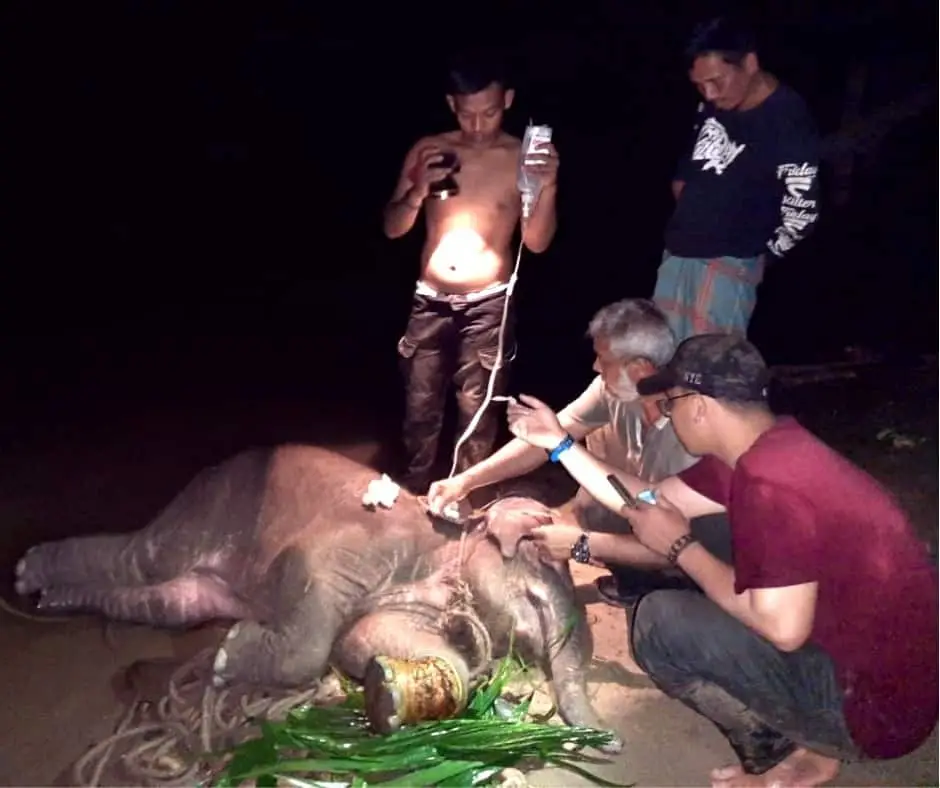
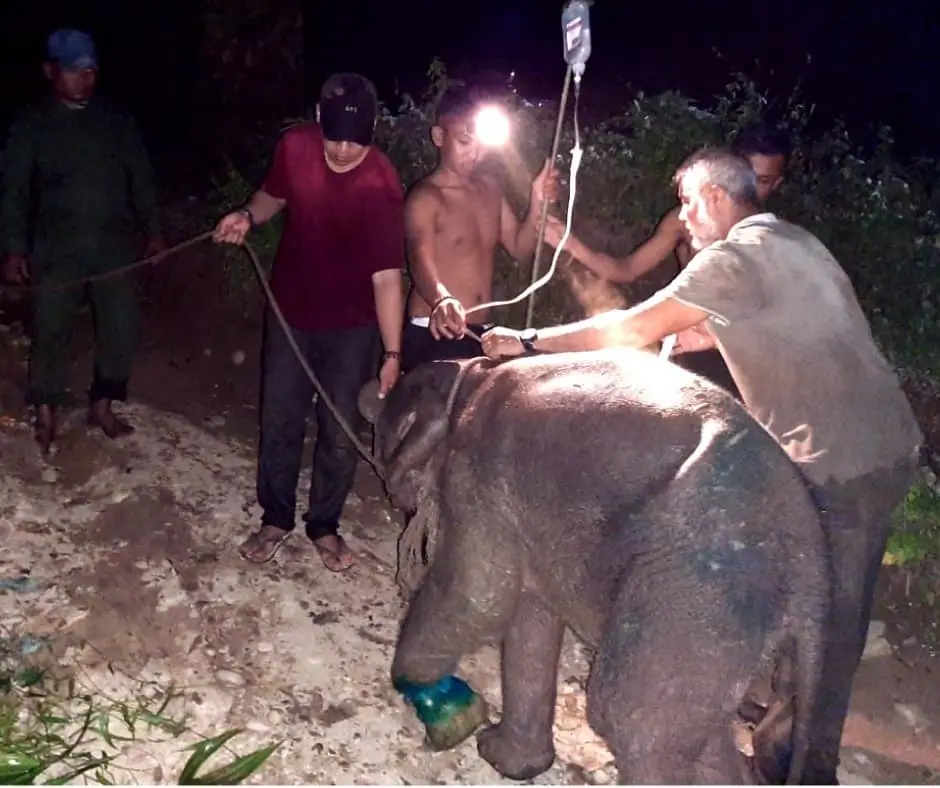
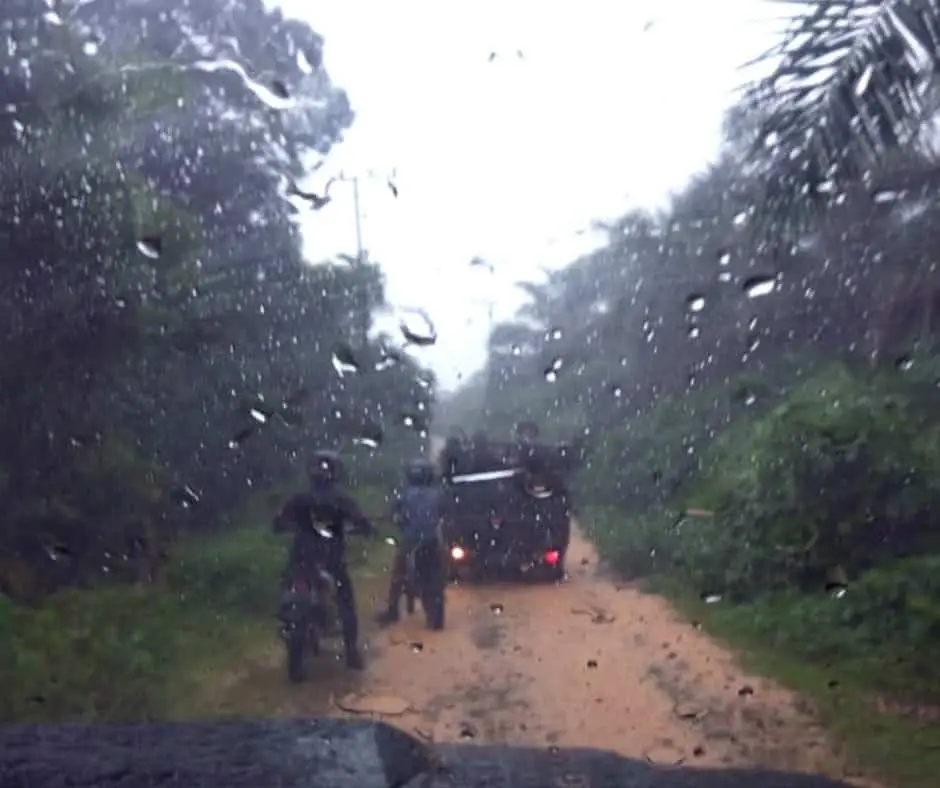
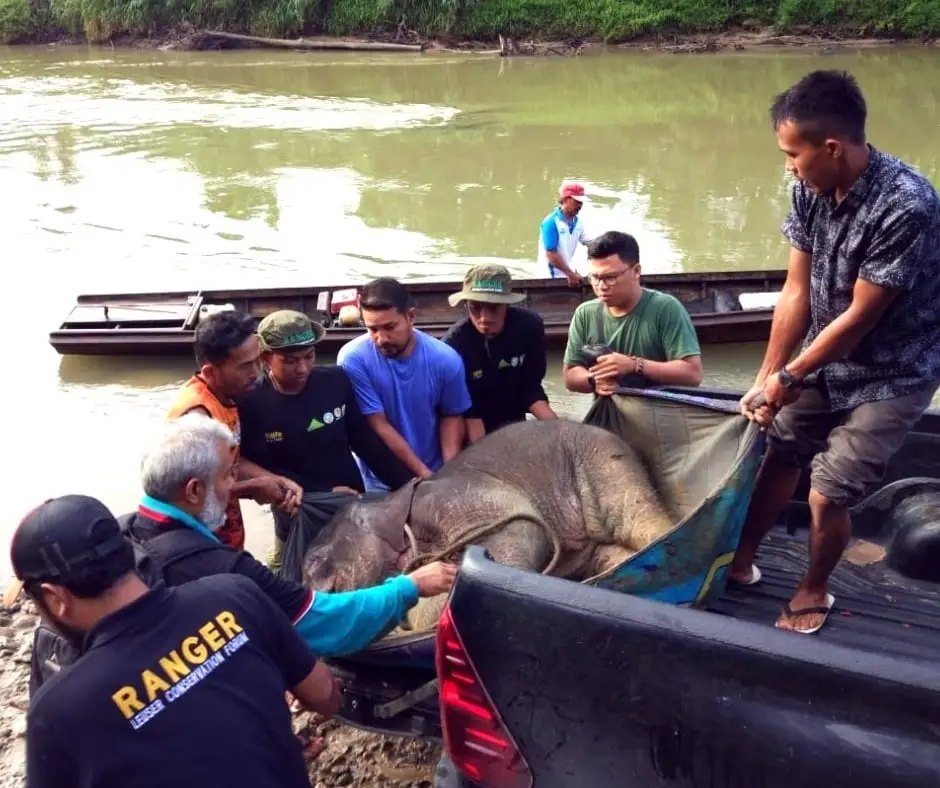
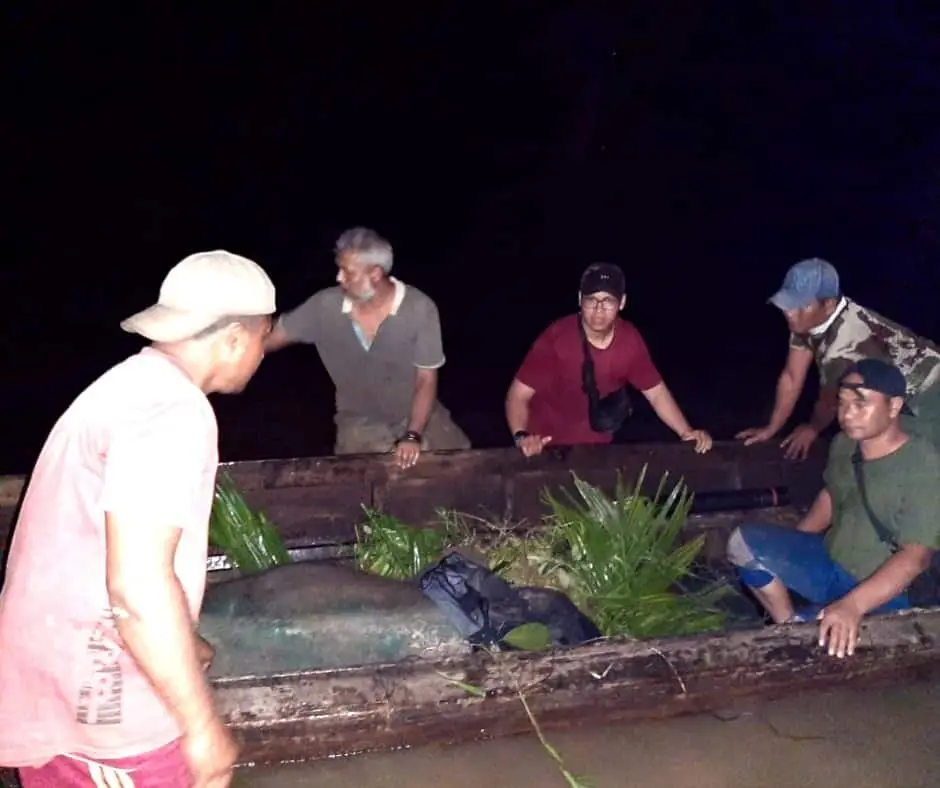
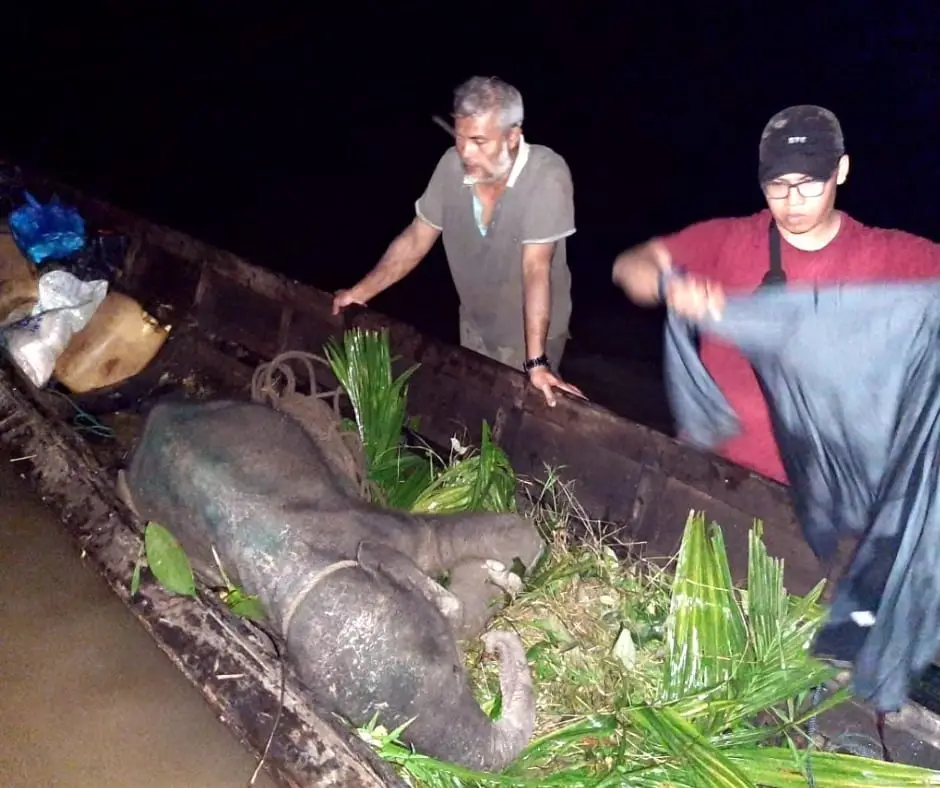
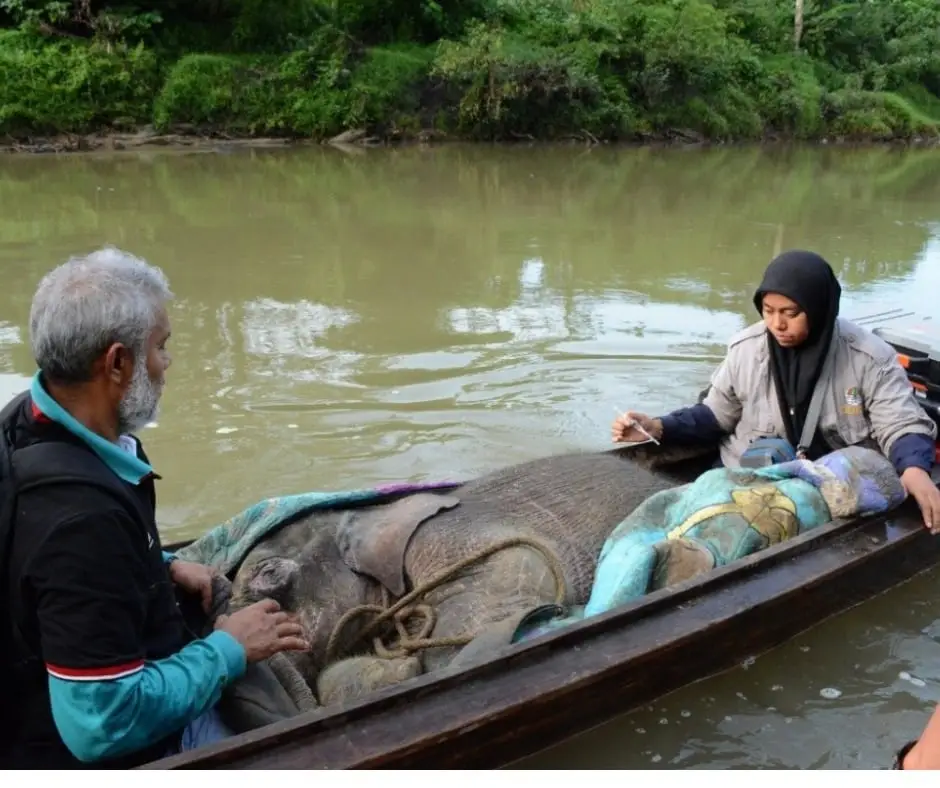
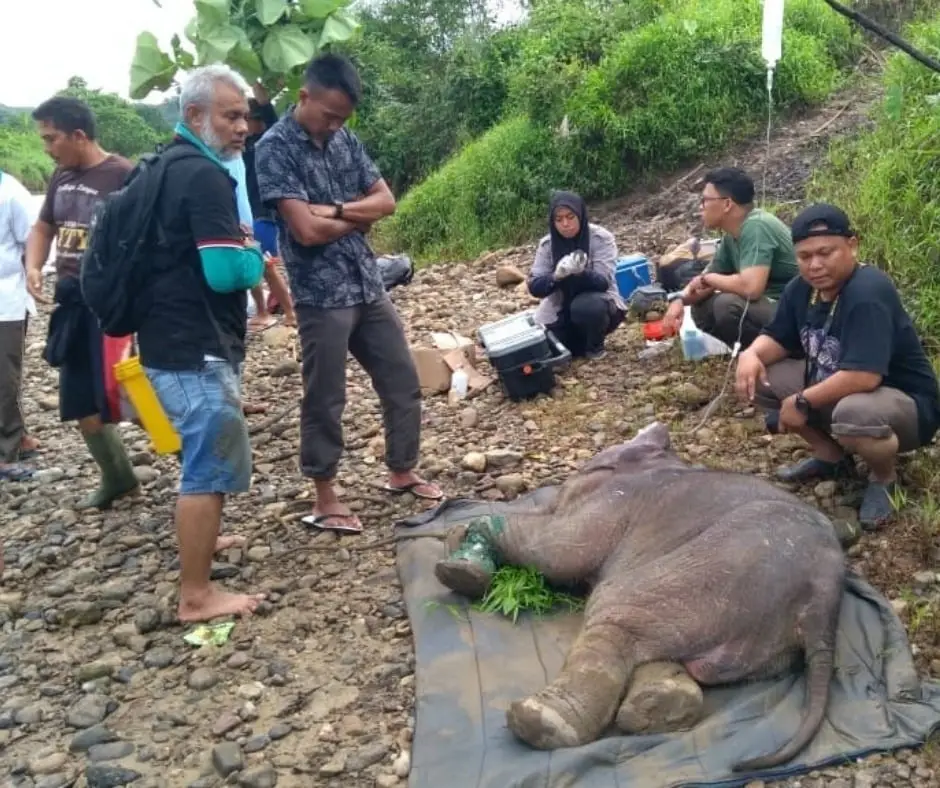
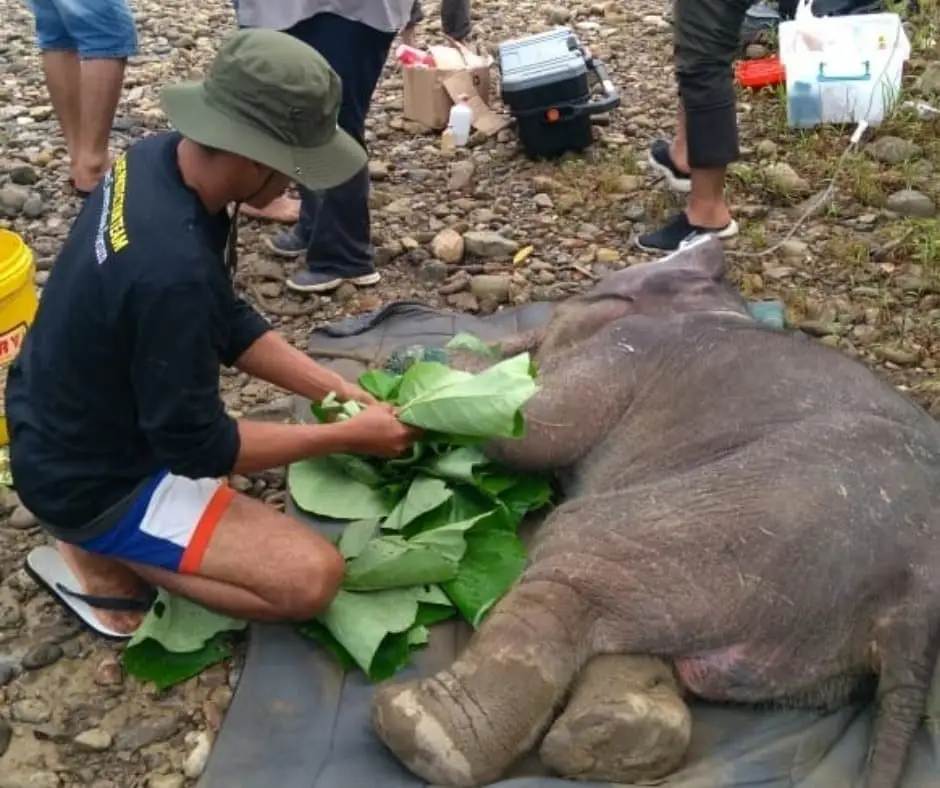
With all our willpower, we try our best to ensure the rescue of the elephant.
The first weeks was a very difficult time for the elephant to live among humans. But at the very least, she feels comfortable. She is able to sleep surrounded by humans and happy to be fed milk.
Our staff is on standby monitoring 24 hours, 7 days a week. She is now recovering, socializing with other tame elephants at the camp, and has recently started eating grass as well.
The cute elephant is loved by the team and staff at the camp. It is unthinkable that anyone would injure her. The elephant is later named Salma (an acronym for “Save the Wildlife in Leuser and Aceh Communities” in Bahasa Indonesia).
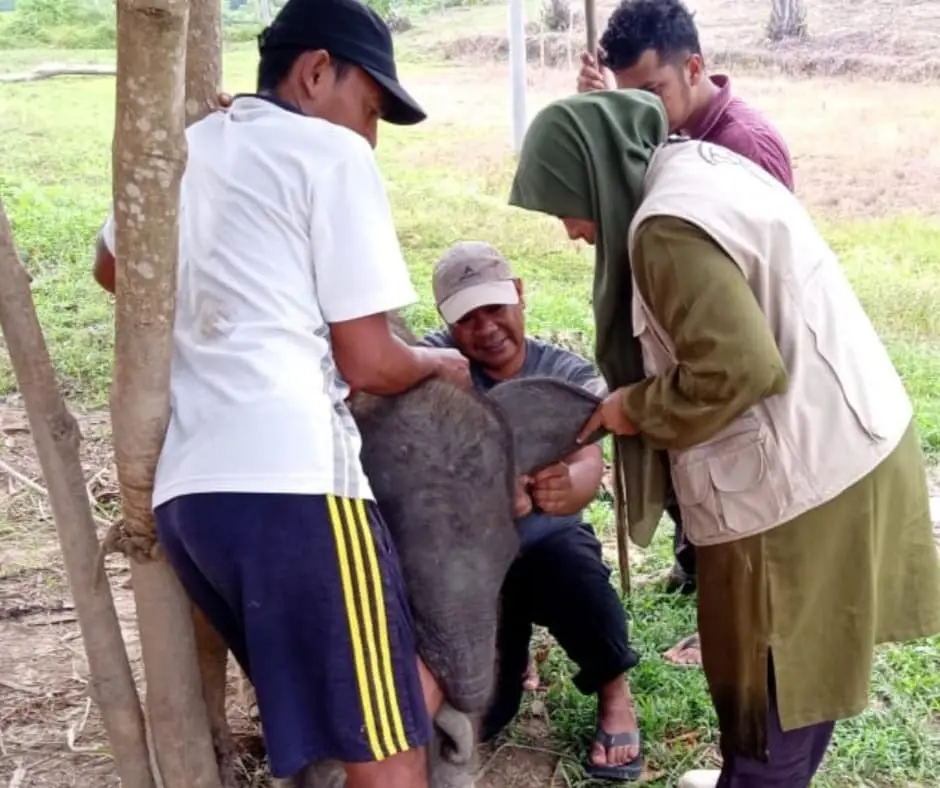
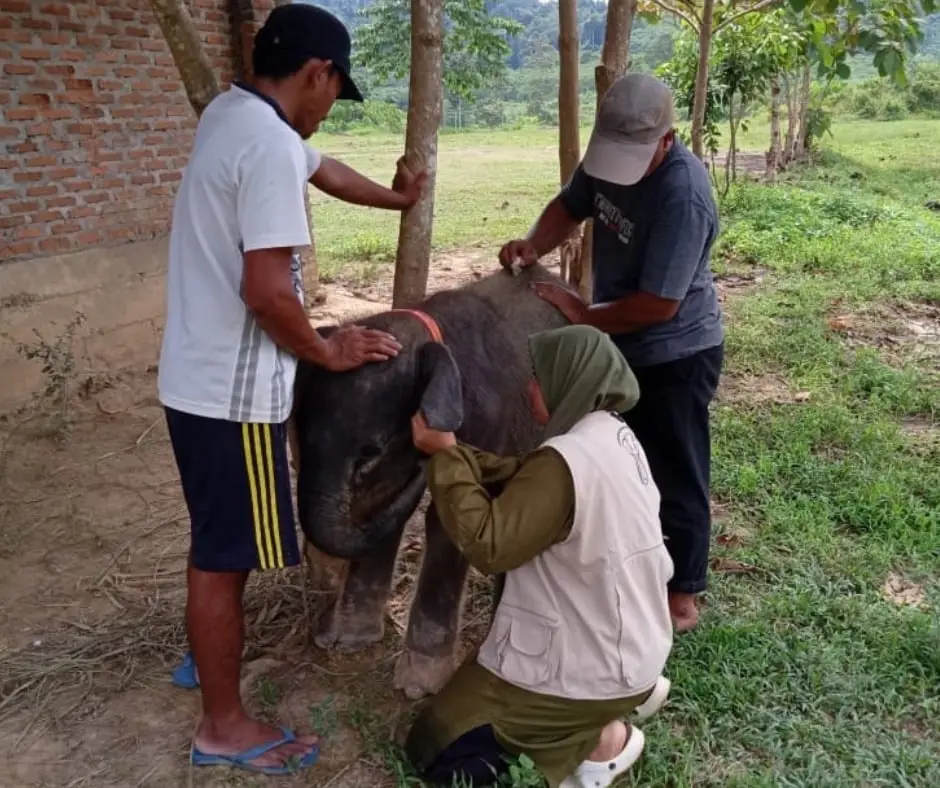
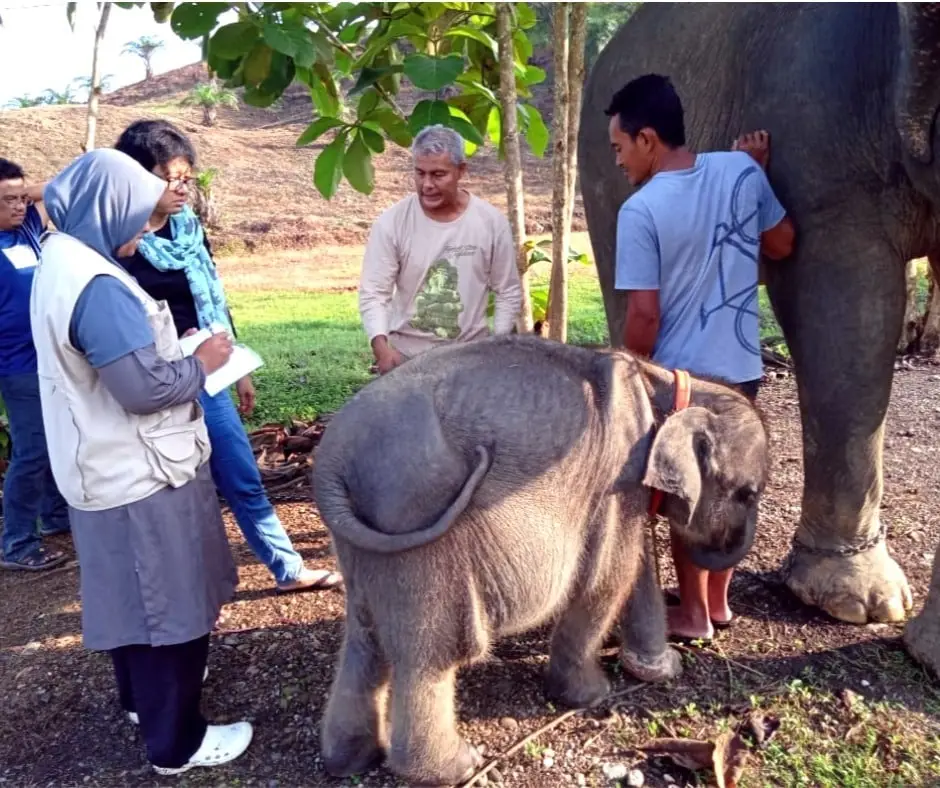
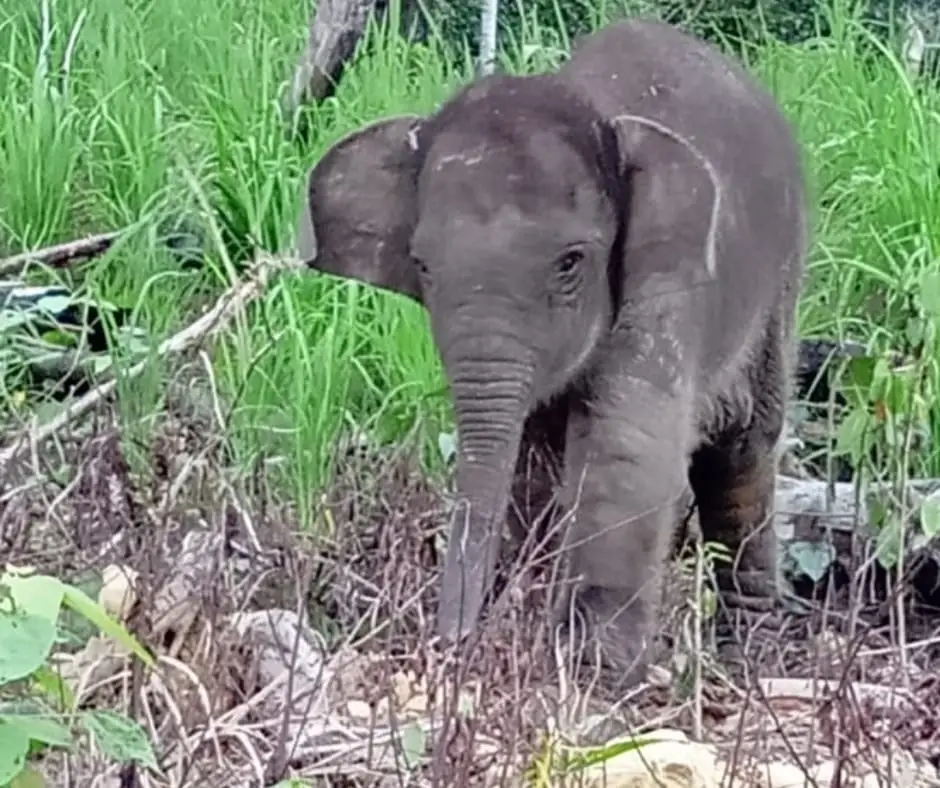
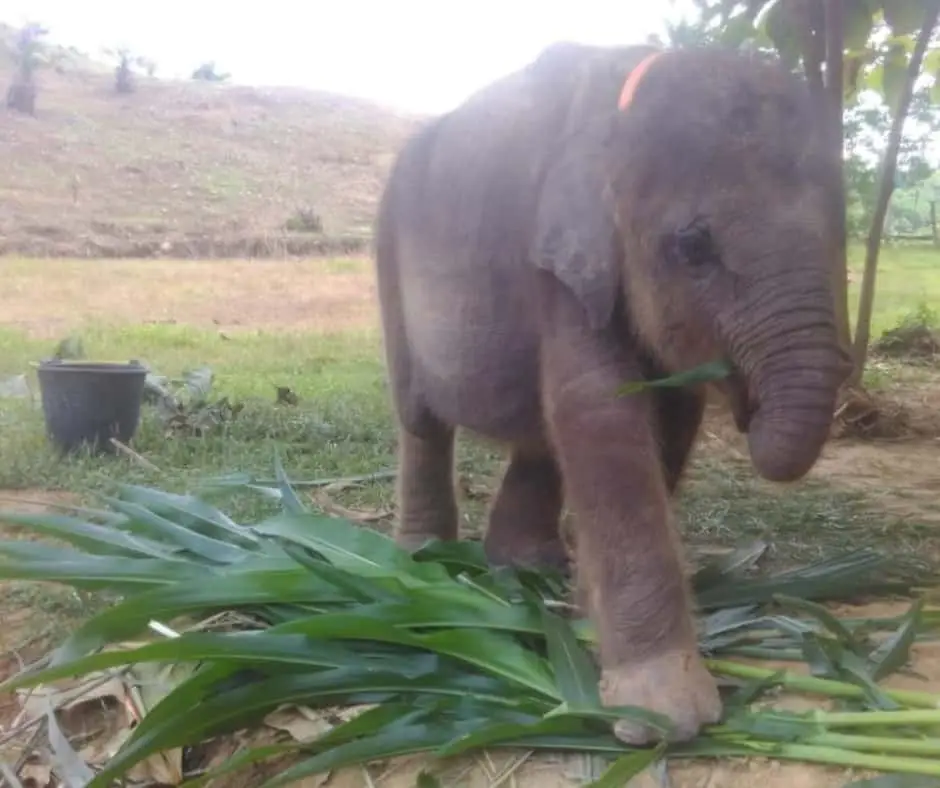
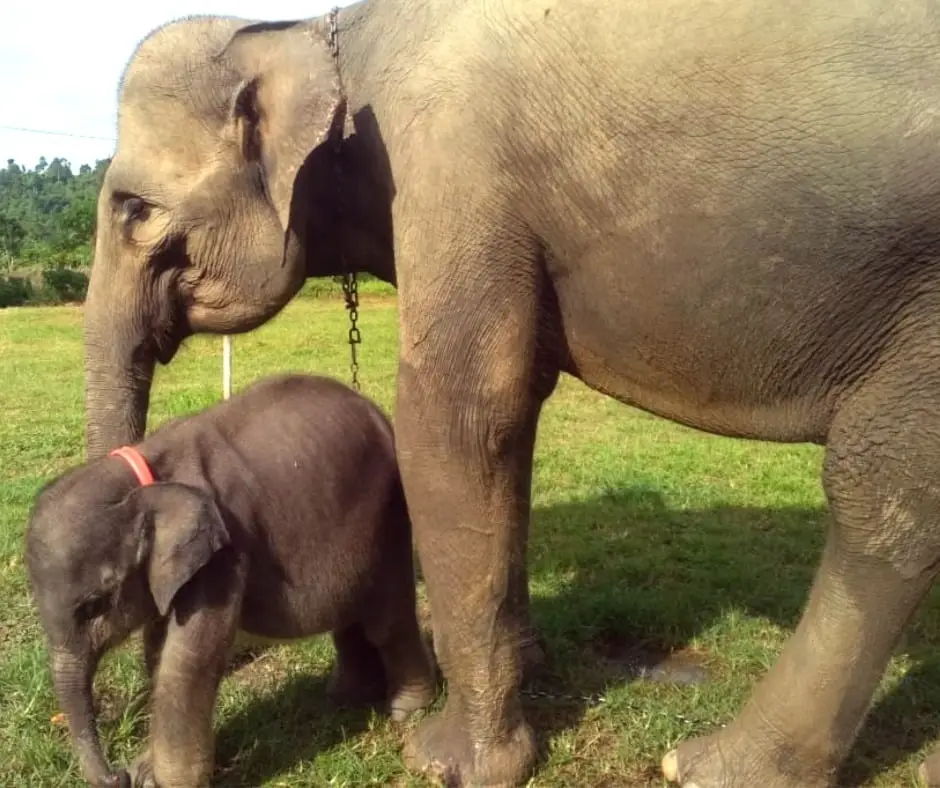
Leuser Conservation Forum (FKL) was founded in 2013 with a mission to help save the Leuser Ecosystem in Aceh and North Sumatra Provinces. The Leuser Ecosystem is a 2.6 million hectares expanse of forest rich in biodiversity. Today, FKL deploys 26 units of Wildlife Protection Team across the Leuser Ecosystem in Aceh specifically to treat, rescue elephants and other wildlife injured. With more than 200 people in the field, FKL’s protection unit is the biggest managed by a local NGO in Indonesia.
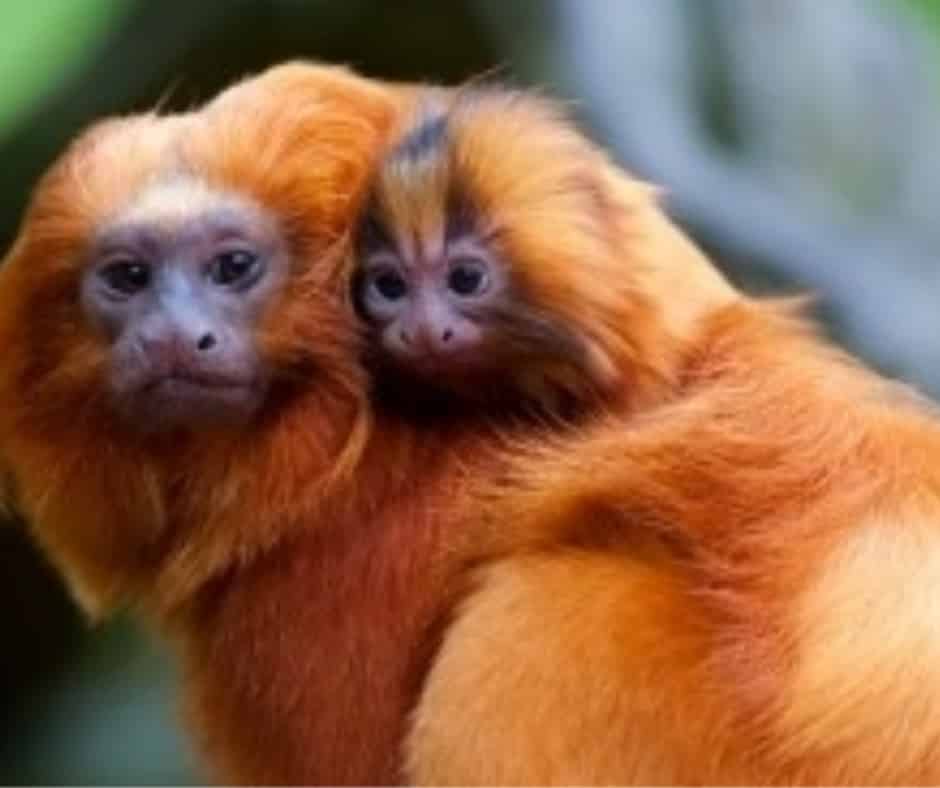
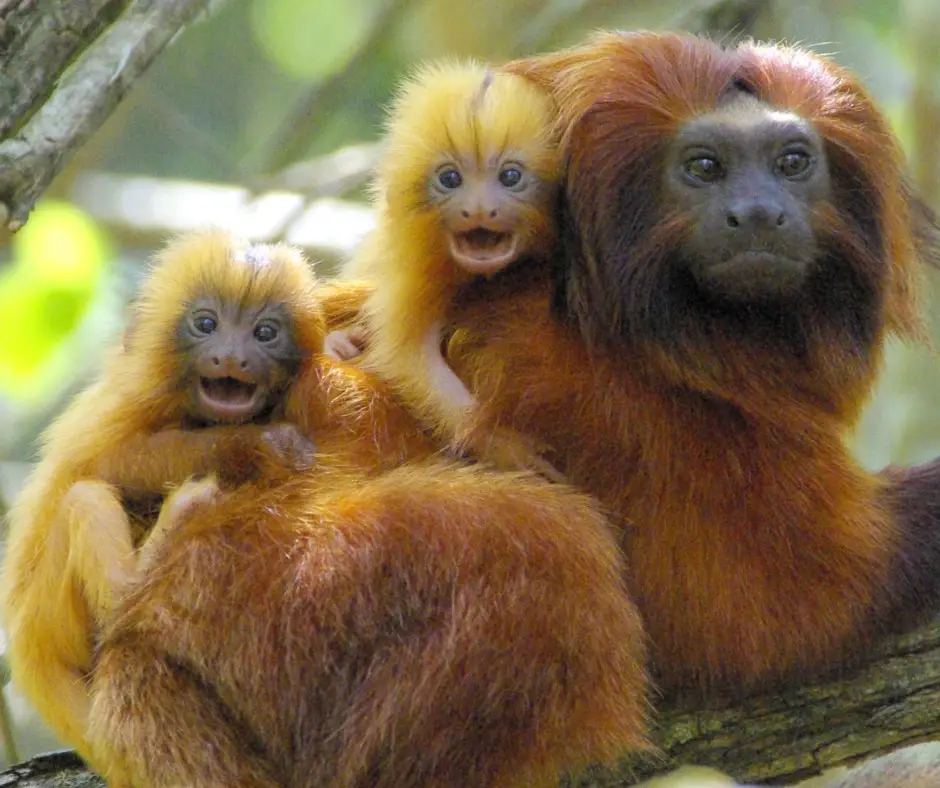
September 10, 2019: Troubling news for golden lion tamarins. Yellow fever threatens one of the world’s most renowned conservation successes.
The wild population of golden lion tamarins suffered a dramatic decline in the wake of the worst yellow fever outbreak in Brazil in 80 years. According a study published today in the journal Nature.com, the wild tamarin population has declined by 32 percent since 2014. This reduction marks the first drastic loss the species has faced in nearly 40 years.
Prior to the yellow fever epizootic, golden lion tamarin numbers had been steadily increasing—from a few hundred in the 1970s to 3,700 in recent years. The team at Saving Nature joined the effort to save the golden lion tamarin in 2012, helping connect them to larger forest expanses capable of supporting viable populations.
A recent population census by the Associação Mico-Leão-Dourado (AMLD; golden lion tamarin association), triggered by the spread of yellow fever throughout the region, found only 2,500 survivors. A reduction in population size of this magnitude will make it difficult for golden lion tamarins to find unrelated mates, resulting in inbreeding and local extinctions of the species.
Yellow fever was first detected near their geographic range in early 2017, and reports of sick or dead tamarins surfaced in 2018. The AMLD is currently hard at work to reduce the devastating impact of yellow fever on golden lion tamarins. Their multifaceted approach includes an ongoing population census, yellow fever risk and acquired immunity assessments, strategic translocations, and a vaccination program.
Click here to read the full publication.
In the August 2019 Special Edition of Duke Magazine, Dr. Stuart Pimm shares his observations from a recent visit to China.
August 15, 2019: Stuart Pimm
I stand on a small tributary of the Irrawaddy River. Across it is Myanmar—formerly Burma: I’m about as far west in the Chinese province of Yunnan as I can be. Borders between countries fascinate, for they illuminate different experiments in how we manage our natural world. Across the river, the land is going up in smoke. There’s a dense blue haze. At night, I see dozens of small fires, while overhead a satellite maps them from their thermal infrared radiation.
On returning to Duke, I look at what those maps show. China’s border is obvious. For a thousand miles along its southern and southwestern frontier, it has very few fires, while thousands carpet the land of its immediate neighbors.
Across the river unfolds a human tragedy, repeated across the developing world. Poor farmers burn the land each year to clear forests and brush and to enrich the poor soils with the nutrients the burning releases. On steep slopes, the inevitable heavy rains will wash away those nutrients, the soils, and often people’s homes too. The land’s fertility degrades each burning season.
Globally, burning tropical forests adds 4 billion tons of carbon dioxide into the atmosphere a year, almost as much as all the emissions in the U.S. and more than those from the European Union.


December 4, 2018
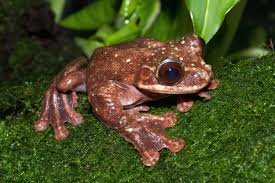
There is nothing more rewarding than learning that a species thought to be extinct has managed to somehow survive against formidable odds. The horned marsupial frog (Gastrotheca cornuta) is one such species.
Horned marsupial frogs are unique among amphibians. Named for the leaf-like horns on the top of their head and for the pouch on the female’s back to gestate tadpoles, they live in the rainforest canopy. The male’s call, like the pop of a champagne cork, celebrates the mating season. Males fertilize eggs externally and place them in the female’s pouch. Here the developing tadpoles, with umbrella-like gills, eventually emerge as tiny frogs, without a having free-swimming phase.
Once having ranged from Costa Rica to Ecuador, their numbers have steadily dwindled as their habitat has been polluted and destroyed by commercial interests. Finally disappearing from sight in Ecuador in 2005, this reclusive amphibian was presumed to have succumbed to deforestation, the lethal chytrid fungus, agricultural pesticides, and crop fumigation.
It turns out that we haven’t lost them yet. A small population of horned marsupial frogs was able to survive in a remote area of the Choco rainforest. A team of scientists recently discovered six individuals and heard more vocalizing on a parcel of land our local partner acquire earlier this year. As the research continues, we hope to learn more about these survivors, as well as other isolated species taking refuge here.
The property is now protected as part of our broader vision to prevent large-scale commercial logging and oil palm plantations from intruding farther into what remains of this richly diverse tropical forest.
Western Ecuador ranks among the most threatened biodiversity hotspots in the world. The most threatened habitat is the lowland Chocó rainforest, which almost rivals the Amazon in terms of biodiversity but far surpasses it in terms of endemism and of course deforestation. The Chocó has more endemic birds than any other region in the world; it also harbors >2,250 endemic species of plants.
Having already lost nearly 98 percent of the original forest, the Ecuadorian Choco is facing the highest rate of deforestation in the country. We are currently developing an ambitious strategy to establish a mosaic of strictly protected reserves by building wildlife corridors that connect, protect, and restore disjointed forests.
Help us save the last 2% of the Ecuadorian Choco for the horned marsupial frog and thousands of other endemic species.
Copyright 2025 Saving Nature | fGreen Theme powered by WordPress
Give Someone A Forest
Offset someone’s carbon footprint this year and you are giving two gifts. The first for your loved one. The second for the planet.
The time is now to enlist new trees in the fight against climate change
Stay connected for good news from the front lines of conservation.